


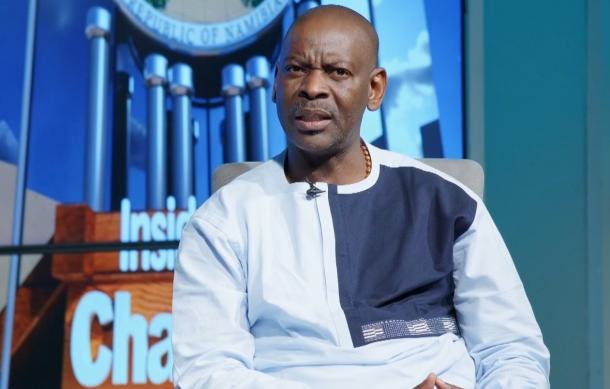
Deputy Speaker of the National Assembly Phillipus Katamelo says no law or parliamentary rule can fully regulate the moral conduct of members.
Katamelo emphasised that ethical behaviour ultimately depends on the consciences of individual lawmakers.
Speaking on NBC's Inside the Chambers, Katamelo said while rules and laws provide a framework for conduct, they cannot dictate personal morality.
"The matters we are dealing with are about the moral conscience that you yourself subscribe to. Overall, this means that no amount of rules or laws can dictate personal morality. Wording can be reduced to the extent that it can regulate morality, but the law and the rules will give you a framework as to how to conduct yourself."
He explained the steps taken whenever the house, in session, becomes unruly.
"The privilege committee will convene to review the submission I will present on behalf of the House to investigate the matter. Basically, they will go back. They will look at the videos. They will look at my ruling. They will apply the rules. However, I will define the terms and conditions, one of which will require that the mentioned member be allowed to explain his statement. And that now means whatever is said on social media is not taken as a record. The committee will use what he presents to investigate and recommend to the House within seven days."
The Deputy Speaker also noted that the current parliamentary term includes a large number of first-time legislators, with about 80% of them being new.
He said this has contributed to some of the challenges seen in the chambers, as new MPs adjust to parliamentary procedures and conduct.
In this vein, presiding officers adopt a more lenient approach to allow members time to familiarise themselves with the workings of Parliament.
He, however, indicated that going forward, stricter adherence to parliamentary procedures may be necessary to ensure the effective functioning of the institution.