


Namibia is working to build a greener and more inclusive financial system through a national dialogue on sustainable finance.
Against this background, the Namibia Sustainable Finance Alliance, the Bank of Namibia, and RMB Namibia hosted a discussion aimed at finding practical solutions to address climate risks while promoting sustainable investment in the country.
The deliberations focused on the need for institutions to work together to support a sustainable economy and address key challenges.
These include long investment periods and limited funding, which make it harder for private investors to support climate change initiatives, as well as the growing impact of climate change on the financial sector.
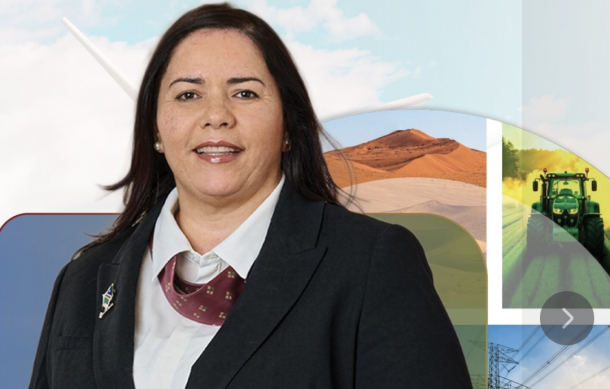
The Deputy Governor of the Bank of Namibia, Leonie Dunn, said sustainable finance in the country must move from discussion to practical implementation.
She stressed that one of the key challenges is the lack of reliable data, warning that without it, climate-related financial risks remain too abstract for institutions to act on effectively.
“Without credible data, climate and sustainability risks remain far too conceptual. We strongly believe that with better data, they become more measurable, more comparable, and more actionable. In the same way, without sustained capacity-building, institutions may adopt the language of sustainable finance without being adequately prepared to implement it. Without continued engagement across the market, important actors may move at different speeds, guided by different assumptions and objectives, in ways that weaken our collective momentum,” she said.
In his contribution, Sustainable Finance Transactor at Rand Merchant Bank, Tshepo Ntsane, said Namibia has a wide range of sustainable finance opportunities, from green bonds and loans to impact-based investments.
He also highlighted the importance of transition finance, which supports carbon-intensive sectors that are not yet fully green but are working towards reducing emissions.
“The question is: how does Namibia, as a country, take advantage of this, and Africa as a continent? This is one of the slides I really like, and it makes me proud as an African. In many instances, Africa is often seen as being left behind, but this presents a different picture. It shows that we are actually on par when it comes to sustainability and sustainable finance policies and strategies. We are seeing sustainability bond segments on our stock exchanges, common markets developing across the continent, and ESG reporting becoming more widespread,” he added.