


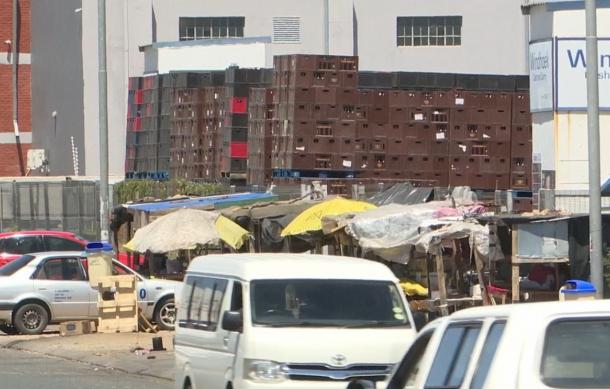
Street vendors form a significant part of Namibia's informal sector and contribute meaningfully to the economy. However, some traders face restrictions due to regulations governing where and how vending activities can take place.
A late 2025 study launched by the government, with support from the UN Global Accelerator, estimated the country's informal economy at $13 billion.
According to the study, the informal sector contributes 26.5% to Namibia's GDP and employs 58% of the national workforce.
In Windhoek, the City Police is responsible for enforcing municipal by-laws.
These regulations restrict street vending in undesignated areas without a valid permit, along with other public compliance requirements.
City Police spokesperson Superintendent Marcelline Murapo explains that enforcement operations targeting informal trading are conducted regularly, particularly in high-traffic areas such as the central business district and major taxi ranks.
"You see, we have a municipal by-law section or unit that specifically deals with street trading. This unit is specifically for that. It means that enforcement operations are conducted regularly, particularly in the CBD and in the major taxi ranks. You see, this section has shifts that operate 24 hours."
Murapo says enforcement efforts focus on traders operating outside approved areas, while those in designated spaces are allowed to continue their activities.
"We actually do not remove any vendors from designated areas. The reason is because vendors who are operating in a designated area are authorised to trade there. We only deal with unauthorised or illegal traders. But the law that governs us as the city police is the municipal bylaw street traffic regulations."
She adds that the current by-laws remain adequate and continue to provide a framework for regulating street vending in the city.