


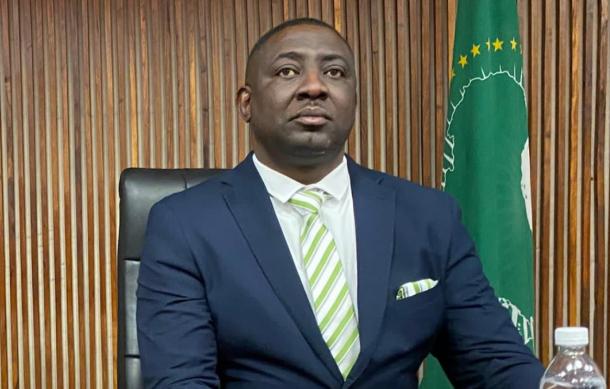
The chairperson of the Parliamentary Standing Committee on Constitutional and Legal Affairs and Petitions Committee, Elder Filipe, said public consultations are an opportunity for Namibians to reflect on the progress made under the Constitution and determine whether it still responds effectively to the country's current social, economic, political and technological realities.
Speaking at the opening of the consultation in Hardap, Filipe emphasised that the Constitution remains the supreme law of Namibia and the foundation of the country's democracy, governance structures, rights and freedoms.
Filipe stressed that the constitutional review process must be inclusive and participatory, giving all Namibians an opportunity to contribute to discussions on possible reforms.
"Let us use this platform to strengthen our democracy, promote constitutional awareness and contribute towards building a more inclusive, just and progressive Namibia for the future generation."
Hardap Governor Riaan McNab says the Constitution is a living document that must remain relevant to the daily realities and challenges faced by Namibians.
"As residents of this region, to air our views and to give our inputs, I'm therefore strongly encouraging us all to openly and fairly take part in your democratic right so that we can change the living condition of our people."
Former Ombudsman John Walters said that when the Constitution became law, lawmakers then believed that it was a well-crafted document.
"But along the line we discover it is not always for the purpose; there's some gap in this, or somebody runs to the court and says this piece of legislation is not compatible with our constitution, which is correct, but unfortunately we cannot just read any law, and so much in our constitution is not written there. The courts cannot do that; all the courts are doing is that they interpret the constitution and the legislation."
Committee member Job Amupanda explained that the committee started this process to engage meaningfully from the basis of understanding that there are people who live on their lived realities.
"They understand their challenges; they understand their issues. They sometimes even have better suggestions based on experience and their lived realities. So that's what we want to be able to do; if we don't have it in our constitution, we will not have it in our laws eventually."
The consultations give the opportunity to the public to engage with lawmakers to identify how they can address the needs of the communities in the country's 14 regions.