


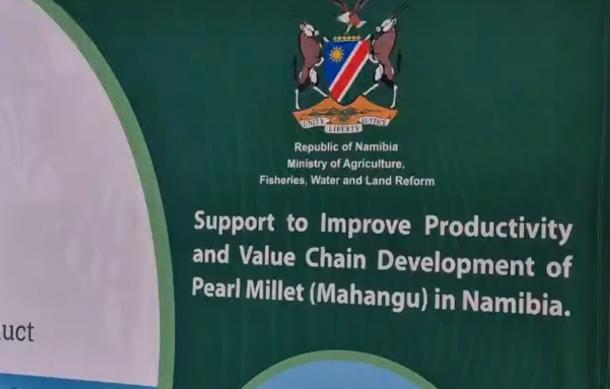
The Food and Agriculture Organization of the United Nations (FAO), in collaboration with the Ministry of Agriculture, Fisheries, Water and Land Reform official (MAFWLR), launched Namibia's One Country-One Priority Product (OCOP) Initiative, with mahangu-pearl millet designated as Namibia's priority product.
The launch marks a significant milestone in Namibia's commitment to strengthening domestic food security.
The FAO initiative is designed to help countries identify special agricultural products that carry unique cultural, nutritional or agro-ecological significance.
Since its launch, more than 95 countries across all five FAO regions have joined the initiative, collectively promoting over 56 Special Agricultural Products, or SAP.
FAO's specialist for plant production and protection, Peter Chinwada, reiterated, "Namibia's OCOP product is mahangu, and that choice was not made at FAO headquarters in Rome; it was made here in Namibia by the Namibian government, reflecting the crop's central place in our food culture, our agricultural landscape and our livelihoods.
The project launch at Oshakati aims to improve productivity and value chain development of pearl millet (mahangu) in Namibia under one country, one priority commodity initiative.
Mahangu is gluten-free, highly digestible and rich in vitamin B and minerals such as iron and magnesium that are essential to human health.
The Agriculture, Fisheries, Water and Land Reform minister's speech was delivered on her behalf.
"This event marks a major milestone in our shared efforts to ensure food security, enhance rural livelihoods, strengthen climate resilience and drive sustainable agricultural growth, fully aligned with the sixth National Development Plan (NDP6)."
It was identified that mahangu feeds more than 60% of Namibians, yet local production currently meets only 52% of national demand.
The project targets an increase in certified mahangu seed output, training of over 800 seed growers, and a measurable improvement in yields.