


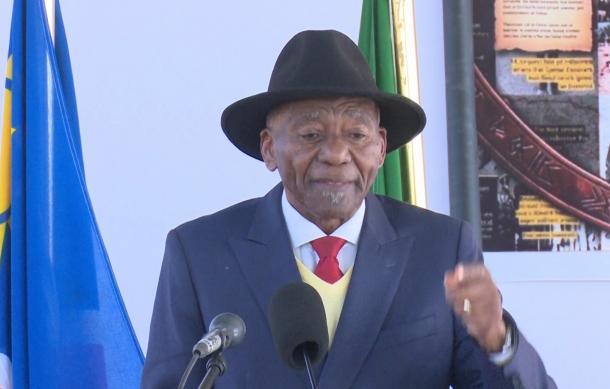
Former Speaker of the National Assembly Professor Peter Katjavivi has described the enactment of the commemoration of Genocide Remembrance Day as having rejuvenated a non-wavering call for restorative justice following the heinous crimes committed against Namibians at the hands of the German forces in 1904–1908.
Katjavivi expressed this at Ohamakari in Okakarara Constituency, where he said the nation can forgive but cannot forget the effects of genocide.
Katjavivi said the day aims to provide conducive environments where the nation can unite and ensure that genocide never happens again in Namibia.
"We are hopeful that Genocide Remembrance Day will provide a conducive environment for the nation to unite and to ensure what happened in the past, what led the foreign power to subject us to humiliating inhuman conditions in our land, should never be repeated. Healing and unity are the keys."
Katjivivi urged Namibia to draw lessons from Rwanda's successful recovery from the 1994 genocide.
"Many of the gains Rwanda is seeing today are because the country is united in purpose with a strong sense of resolve to ensure a better future. We are equally committed to doing that. We are not going to do anything that will bring about the kind of suffering that has been described here, causing destruction and death and losing every piece of our livelihood. Therefore, this day is very important in contributing to national healing."
Popular Democratic Movement President McHenry Venaani, on his part, said the battles and sacrifices of the heroes in the genocide war must never be forgotten but retold for future generations.
"As we commemorate Genocide Remembrance Day, let it never become an empty ritual or symbolic exercise without meaning. Let it remain the conscience of our nation. Let it teach future and current generations the truth about colonialism and remind the world that African suffering is no less suffering and that African history is no less a history."
Venaani also called on the government to rescue the negotiations between Namibia and Germany, as the OvaHerero and the Nama/Damara and San tribesmen are declining the 1.1 billion euro compensation payout for the 25 years of suffering.
Otjozondjupa Governor John ||Khamuseb also spoke at the event and said, "Otjozondjupa is not just a geographical space; it is a sacred ground of our ancestors. It is a place of memory, of loss and resilience, and from this ground we must cultivate reconciliation that is rooted in truth and not in silence. Let this day serve as a national mirror reflecting both our painful pasts and our responsibility to build a just future."
The day was commemorated at Ohamakari, also known as the battle of Waterberg grounds, where about 150 OvaHerero people died in battle with German armies, and some subsequently fled into Omaheke and Botswana in 1904-1908.