


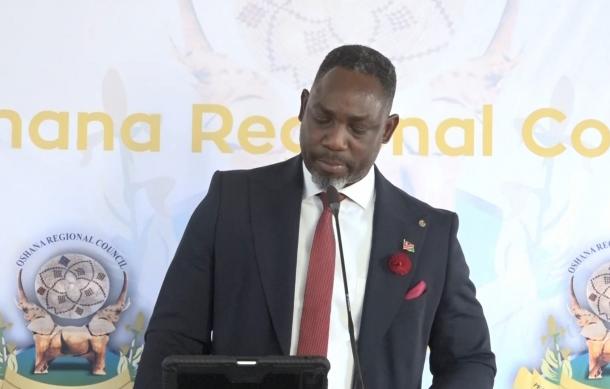
Oshana Governor Hofni Iipinge has expressed satisfaction with the response from regional stakeholders reporting on government programmes and projects in the region.
Iipinge introduced a quarterly progress reporting process to track projects in the region.
Speaking during an engagement with regional heads of public institutions, Iipinge recalled that shortly after assuming office a year ago, he requested every office, ministry and agency (OMAs) operating to submit quarterly progress reports to the governor's office.
Iipinge stressed that the initiative was never intended to create another layer of bureaucracy but rather to foster a culture of coordination, accountability, and information sharing among government institutions.
He said the reporting system enables government institutions to work together, resolve challenges collectively and account to the people they serve in a more coordinated manner.
Iipinge expressed appreciation that stakeholders embraced the initiative wholeheartedly.
The engagement reflected the region's collective commitment to ensuring Oshana plays a meaningful role in implementing the national development agenda.
It also highlighted the level of public investment earmarked for the region during the 2026/2027 financial year under the Medium-Term Expenditure Framework.
"These reports have greatly enhanced our understanding of ongoing programmes, enabled timely interventions where challenges emerged, strengthened coordination among institutions and improved our ability to engage national leadership on matters affecting our region."
He said quarterly progress reports are not merely administrative documents but are valuable management tools that enable the government to monitor progress and identify implementation challenges early.
"During our last high-level consultation, we have all seen that the Oshana Region recorded a total capital allocation of approximately N$375.3 million for the 2025/2026 financial year in the MTEF, of which N$108.2 million, representing 30.3% of the allocated budget, had been expended by the end of the fourth quarter. It is important to note that projects implemented and managed at the regional level have generally performed well."
He, however, noted with great concern that many strategically important projects implemented directly by central government institutions experienced slow progress due to administrative bottlenecks.