


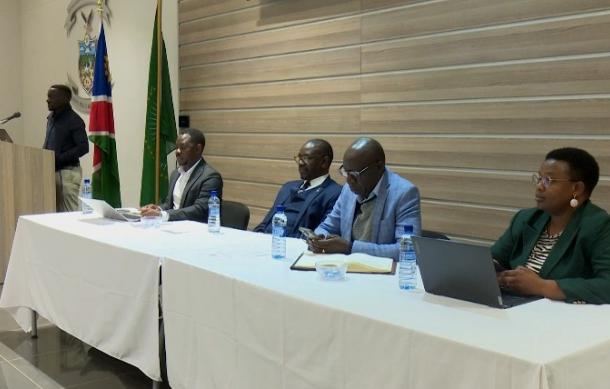
Fifteen years after Namibia adopted its Climate Change Policy, the government is now reviewing the framework to ensure it responds to the changing climate landscape and emerging challenges.
The policy was adopted in 2011, and the Ministry of Environment, Forestry and Tourism's (MEFT) consultant, Tertu Ileka, says significant changes in the climate change landscape have made it necessary to revise the policy.
Ileka says the review will determine whether measures introduced in 2011 to protect Namibia's social and economic livelihoods are still relevant.
"A lot has changed locally and internationally in the space of climate change frameworks, how we adapt, and also who is now vulnerable that was perhaps not considered before, and how they are affected now so one of the reasons why this is being updated is also to try and safeguard what was developed at the time to try and adapt to changes."
The Chief Conservation Scientist, Josefina Kakololo, says the aim is also to integrate indigenous and local knowledge.
"Unfortunately, local knowledge is not documented that that is the issue. I grow up with my grandmother, but before rain season comes, I will be able to because of a certain insect that comes out early. She will be able to predict and have a good rainfall. We should start working to prepare the field so that we could have better knowledge. That's the knowledge that we need."
Consultations aim to find ways to reduce greenhouse gas emissions and strengthen the country's ability to adapt to climate impacts.
Stakeholders are also expected to provide input based on climate-related challenges experienced in their respective regions and recommend practical measures that can be incorporated into the revised policy and NDC 3.0.
The Mayor of Otjiwarongo is Leonard Simushi, who said, "Let us therefore use this consultation to move beyond identifying problems and focus on practical solutions. Let us identify the project that can be implemented. Let us identify opportunities that cannot attract investment. Let us identify policies that can empower our communities."
The process is intended to ensure that Namibia's climate change responses remain relevant to the country's changing environmental, social and economic circumstances.