


The Ministry of Health and Social Services has intensified efforts to combat malaria in the Zambezi Region.
The region recorded 32 thousand cases since January, with 21 fatalities.
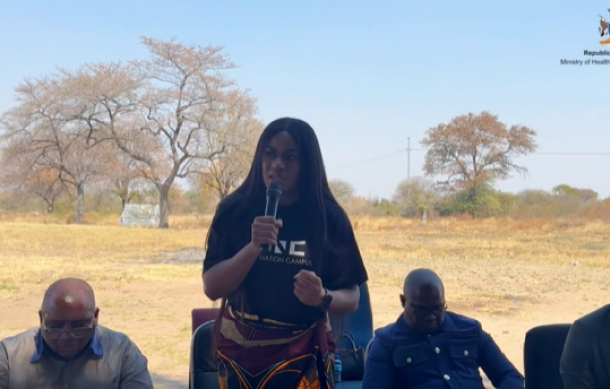
The ministry's delegation led by Minister Esperance Luvindao held a community engagement at Kasheshe to address challenges of non-compliance with the indoor residual spraying campaign.
The engagement follows low participation in communities between Liselo and Kasheshe.
Of the nine thousand 640 households targeted, only two thousand 710 were sprayed.
Two thousand six hundred and forty-four households refused health officials' entry, resulting in a 33% against an 85% target.
Community members raised several concerns, one of them being that they are uncomfortable allowing unfamiliar faces into their homes.
They also stated that the spraying schedules were not effectively communicated, as they were often unavailable when health officials arrived.
They added that the absence of mosquito nets, coupled with concerns over the effectiveness of the chemicals being used, could be contributing to the increase in malaria cases.
"I sprayed it a couple of years back when there was a rise of malaria cases in Kasheshe; the chemical was strong enough to still be effective for a year, and there were no mosquitoes left, and we slept peacefully; however, the minimum chemical is not the same. After spraying, the mosquitoes increase," said Claudi Muzani.
“The reason why they did not spray as many homes, we saw with our specific village, they only work until 10 o'clock in the morning, then knock off or move on to the next village, so who's supposed to spray the homes that have been left behind,” added Jeniffer Sitabi.
The ministry explained that the chemicals currently being used target female mosquitoes, which are responsible for transmitting malaria.
The ministry said the concerns raised by the community would be considered in efforts to address the challenges and improve collaboration during future campaigns.
Health and Social Services Minister Dr. Esperance Luvindao stressed the importance of engaging communities directly when addressing public health challenges.
“We need to have moments like these where we come and engage community members, not only on malaria but also on other issues affecting the community. We must come; we must engage community members."
The ministry will also explore the possibility of acquiring additional mosquito nets for distribution.
It explained that previous distributions mainly targeted expectant mothers, children, and people living in areas considered to be at high risk of malaria.