


Some local business owners in Aminuis Constituency, Omaheke Region, believe the private sector has an important role to play in driving development and creating employment in rural communities.
They say the government cannot carry the responsibility for regional development alone and that stronger partnerships with local businesses could unlock more economic opportunities.
Aminuis’ economy is largely anchored by livestock farming and small businesses, while the constituency also has potential in areas such as agriculture, tourism, manufacturing and mining.
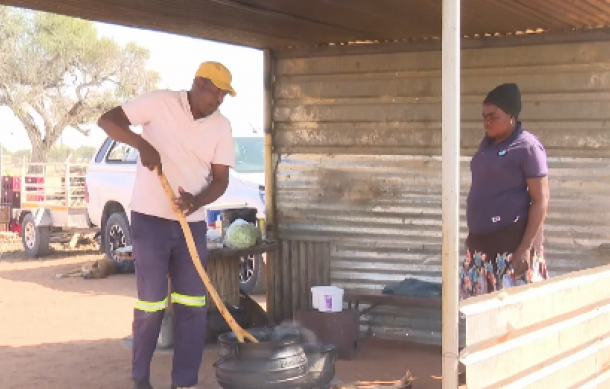
The owner of Otjihuze Trading CC in Aminuis, Kamaijanda Kozosi, said local entrepreneurs are already contributing to development by creating employment and supporting vulnerable members of their communities.
He said the government and relevant stakeholders should continue creating an enabling environment for small businesses, including access to equipment, support and opportunities that can help them expand.
Kozosi said his business, which operates within the local livestock value chain, provides jobs for residents while also supporting families and vulnerable children in the community.
“I think this business should be supported because, if I count correctly, I currently have seven people employed here. The men are responsible for collecting the cattle we slaughter before processing and carrying out all the other work involved in preparing the meat. These people also have families to support. Even when schools close, their children depend on them. This shows that we support development in various ways, and my dream is to ensure that this business expands.”
For local businesses to contribute even more meaningfully to rural economic development, the sector needs adequate support and capacity building.
The manager of Bees Water Market, Motjari Urika, said mentorship programmes and business support could help entrepreneurs improve their operations, create more jobs and contribute to the development of their communities.
He also encouraged residents to consider entrepreneurship as an alternative source of income, particularly in an area where formal employment opportunities remain limited.
“To my fellow residents, I would like to urge them to work hard because we know job opportunities are very limited. Therefore, we must do more business to support our economy and provide jobs for others. Let’s wake up and work hard.”
The call comes as Aminuis continues to explore ways of strengthening its local economy. The constituency’s development opportunities include livestock production, skills development and mining, while existing businesses remain an important source of employment and income.
A proposed development at Corridor 13 also points to growing commercial potential, with plans incorporating business, industrial, mixed-use and other erven aimed at supporting the future expansion of the settlement.
However, local business operators say infrastructure challenges, including unreliable electricity and poor network connectivity, continue to affect their operations.
They are therefore calling on responsible authorities and service providers to address these challenges, arguing that reliable infrastructure is essential for businesses to grow and for rural communities to participate more effectively in the wider economy.