


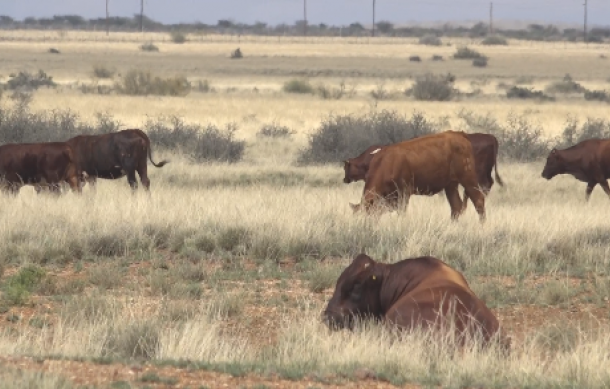
The country is confronted with Foot-and-Mouth Disease (FMD) after being an FMD-free zone for nearly 60 years.
Concentrated in the Karasburg farming district, the outbreak was detected at a farm in the area earlier this week.
Days after the highly contagious disease outbreak, uncertainty hangs over livestock farming communities about the future as restrictions on the movement of cloven-hoofed animals and raw animal products disrupt the livestock sector.
The government has managed to contain the outbreak to a farm where animals tested positive for FMD as it continues to bolster efforts to prevent the disease from spreading to other livestock farming areas.
So far, 17 cattle in total were tested positive for the disease, all from the Karasburg farming district.
Communal farmer Marietjie Snewe expressed concern.
"We are glad that NBC visited us, listened and heard our concerns and how we feel about the disease. We are very worried. This is the first time the disease has hit our area."
Police roadblocks, mainly concentrated in the Karasburg farming district, were set up countrywide to enforce compliance with livestock movement restrictions.
For now, the message from the government is clear: no animal or raw meat product movement, and report suspected cases immediately.
"We are not going to allow anyone to transport meat or any animal such as a sheep, goat, cattle or pig. It is prohibited," stressed Deputy Commissioner Godfriedt Kauhanda, Head of Operations for the ||Kharas Region.
FMD affects cloven-hoofed animals.
Symptoms include blisters in and around the mouth, tongue and feet of infected animals. Infected animals might limp, and lactating animals can develop blisters on teats.