


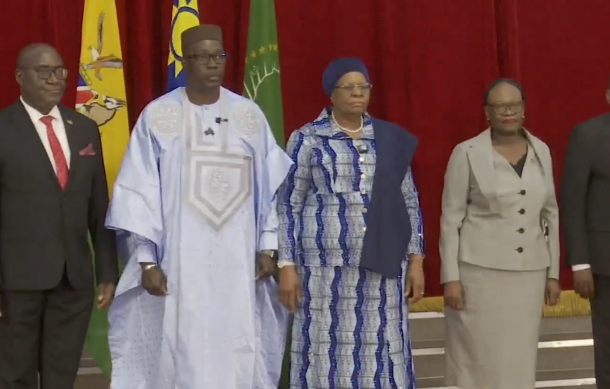
Nine diplomats accredited to Namibia presented their letters of credence to President Netumbo Nandi-Ndaitwah in Windhoek today, reaffirming their countries' commitment to strengthening bilateral relations.
The envoys identified skills development, trade, investment, agriculture and vocational training as key areas for expanding cooperation during their respective tenures.
Among the proposals highlighted was support for the creative industry through a planned cultural vocational centre that would provide training in cultural arts and related skills.
Nigeria's High Commissioner to Namibia, Esther Arewa, highlighted, "One of the things I discussed with Her Excellency is a proposal to establish a Nigerian Cultural Vocational Centre, and she has approved it. At the centre, we plan to train Namibians in producing various cultural art products. OUT
Other areas of cooperation include technical and vocational education and training, renewable energy, transport, youth empowerment, food security, environmental sustainability and investment promotion.
Germany’s ambassador to Namibia, Thomas Wimmer, said, "We are going to be very active in energy, especially renewable energy, and in the transport sector. You mentioned that we just opened the Karibib-Usakos stretch, which is important for the country's import sector. TVET is also important, as we want to create jobs here in the country."
Philippines Ambassador to Namibia, Myla Macahilig, stressed, "We are looking at opportunities where we can take part, such as youth empowerment, education, TVET and food security, which is very important to us. Environmental sustainability is also key, as these issues affect both countries."
Several envoys also pointed to opportunities for collaboration in agriculture, mining, fisheries, maritime development, tourism, information and communications technology, trade and commerce.
Others emphasised the importance of expanding business-to-business partnerships and knowledge-exchange programmes.
Panama's Ambassador to Namibia, Rodrigo Álvarez added, "For us, the Panama Canal is the most important waterway. We call on Namibia to support efforts to ensure that this important waterway remains open and that trade can continue, no matter what."
Mali's Ambassador to Namibia, Seydou Coulibaly, said they "should also explore areas of cooperation, particularly in agriculture. Mali is an agriculture-rich country, and I know Namibia is also active in fisheries and livestock. Nowadays, Namibia is facing challenges in the livestock sector, and there is an opportunity for the two countries to collaborate."
The diplomats further expressed interest in supporting Namibia's development priorities through existing bilateral agreements, development projects and sector-specific partnerships aimed at advancing economic growth and regional cooperation.
"Since we established our diplomatic relations, we have been working very closely to strengthen our bilateral relations and also in multilateral organisations. Your presence here now is to strengthen cooperation, and we are looking forward to good relations between our two countries in serving the best interests of our people," emphasised president Netumbo Nandi-Ndaitwah.
Ambassadors from Türkiye, Sudan and the Hellenic Republic, also known as Greece, as well as the High Commissioner of the Islamic Republic of Pakistan, also presented their letters of credence.