


Namibia's success in resolving conflicts outside the formal court system has set an important precedent.
A delegation from Zimbabwe's judiciary is in the country to benchmark Namibia's Alternative Dispute Resolution System (ADR), which includes formal mediation in the High Court, as well as a framework for conciliation and arbitration in labour disputes.
The processes offer a more flexible, cost-effective, and confidential alternative to traditional court litigation.
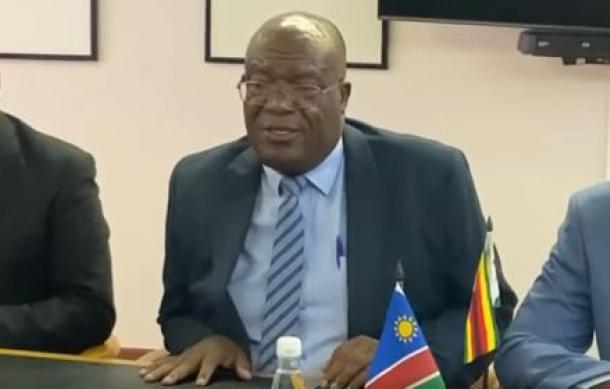
The delegation, led by the Judge of the High Court of Zimbabwe, Justice Tawanda Chitapi, met with Chief Justice Peter Shivute at the Supreme Court.
"The purpose of our coming here is a follow-up on the invitation that you made openly that we were free to visit Namibia and learn from your experiences regarding what we are in the process of doing now in Zimbabwe. That is to try and introduce ADR with a principal focus on mediation, because we realise that our brother Namibia, the jurisdiction, has already gone into that and is in fact implementing that, and we wish to benchmark our own work with what you are doing here," said Justice Chitapi.
The five-day benchmarking exercise is in line with the bilateral agreement between the two judiciaries.
Namibia's Chief Justice Peter Shivute added that "With the level of engagement that our two sites have been involved in, not only advancing this memorandum of understanding but also in the best and the betterment of our two judiciary. So it's a mutual benefit. It's a reduction benefit from the experience of the other. And we're quite happy that we are advancing this very, very happy relationship that has developed between our two judiciaries and our two countries. In fact, this is not a coincidence because our two countries have really enjoyed excellent relations at various levels."
The delegation will visit the mediation department, engage in information-sharing sessions, be taken through judicial case management and attend mediation sessions.