


The OvaHerero community, which returned from Botswana in September last year, says it remains optimistic about the promises made by the authorities upon their arrival in Namibia.
About 50 of the initial over 70 are still living at the camp, some 500 metres on the outskirts of Gam in the Tsumkwe constituency.
During NBC News' visit to Gam, the group that fled to Botswana during the brutal colonial era returned through the government's repatriation programme.
They bemoaned the slow pace at which development is moving and said the authorities are slow to attend to them.
The Chairperson of the committee representing the group, Ihuurah Tjetjoo, said some of the promises included livestock, houses and electricity, but they have not received anything up until now.
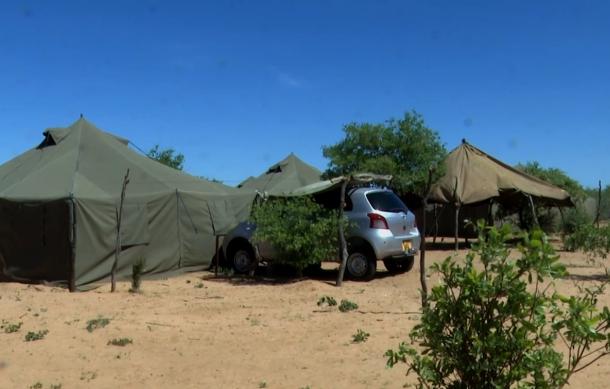
His people still live in tents that are now old and torn up by the strong winds.
On the bright side, he expressed gratitude for the food programme undertaken by the government.
He further said that the land they were given, which is 130 km from where they live, is uninhabitable with poor water and road infrastructure.
Only a few people moved there, who he said had to sell their assets to buy cattle.
"We were told that we will be given cattle and build houses. It was further said that the camp will be demarcated, and everyone will be given a place to build all those things we did not get. All this is what tells us that we are not yet residents. Since the minister left, he never came back. There is no one from the office of the minister who came back to see how we live here, except people we called here, the likes of Mr Nangolo, but when he came and went back, he never got back to us."
Justice Wapimbie is a senior traditional leader in the Kambazembi Royal House.
According to him, since the group arrived, the Kambazembi Royal House has been working closely with them.
His office issued them with recommendation letters to help their children get placements in schools and to be assisted with getting registered; however, the biggest challenge they continue to face is obtaining livestock branding marks for them to engage in livestock farming.
"Some people did not get tents; most people got the big ones, but very few got the small ones. During the rainy season, like now, those who don't have the small tents suffer. The other thing is: the road to Tjipahewa should be fixed. There is also just one borehole. People were promised that additional boreholes would be drilled, but nothing has been done, which means the residents' issues remain unresolved."
The residents also expressed that they wish to meet with the Otjozondjupa Regional leadership to iron out these challenges.