


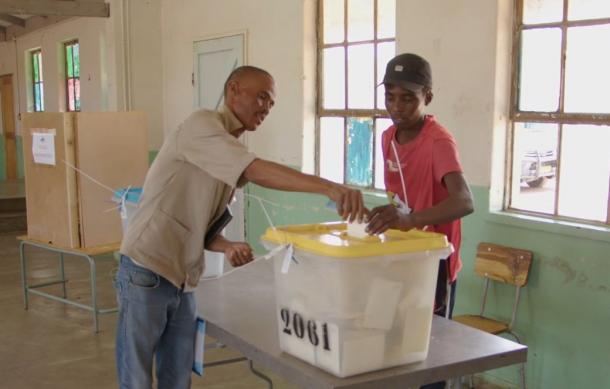
Mandatory voting has been explored as a possible solution to boost voter turnout.
The suggestion emerged during the Election Observation Mission Knowledge Sharing and Public Dissemination event held in Windhoek.
Mandatory voting is treated as a legal duty, with non-voters facing small fines or needing to provide a valid excuse.
Namibia recorded a low turnout of 40% and 36% in the just-ended Regional Councils and Local Authority elections, respectively.
The Deputy General of Flanders in Southern Africa, Nicolas Vandeviver, noted Belgium achieved over 90% turnout driven by compulsory voting.
"Now, in fact, a lot of citizens indicated that they did not go to vote because they didn't feel represented or think voting matters. Because they think politicians will only serve their own interests anyway. Now, to our government, this was a wake-up call. And ever since, we've had an ongoing debate again on reinstating that mandatory voting, a question of representation. If only, and I'm speaking about Flanders now, 60% of the population votes, your government policies will only reflect 60% of the needs and desires of your population. It will reflect a number of needs. In Namibia, even if you think about this, it means that the will of two out of every three citizens is not represented in their local and regional governments."
Dr Vandeviver added that choosing the right voting day is crucial to ensuring every eligible voter casts their ballot.
"So one solution which we are already doing is to make voting easier and keep voting stations open for longer during the day. So you vote from seven to nine, for instance, like in Namibia, or have voting stations and strategic points. So you can vote on the way to work, for instance, or allow voting by mail, as I think is the case in Switzerland, or even online. But also, I think this is what the project is about. We need to increase civic participation in the electoral process," he expanded.
The Election Observation Mission initiated by the Namibia Institute of Democracy (NID) sought to provide an impartial account of the electoral process as experienced by observers.
67 observers were trained and deployed around Windhoek constituencies and submitted reports of their observations.
Some of the findings include a peaceful voting environment, an inclusive voting process, good ballot accounting and verification and a more organised voting process by the Electoral Commission of Namibia (ECN).
Valentinia Mentor is the Associate & Assistance Program Manager at NID who says, "Despite the extremely low voter turnout, the mission was a success. It kept, of course, essential insights into the voting operations, public participation and the procedural integrity here in the commerce region. And the finding not only strengthens Namibia's electoral framework, but it also helps us identify the gaps."
The Election Observation Mission recommended expansion of observers to all fourteen regions, improving ECN's partnership, increasing logistical planning, and conducting post-election debriefing.