


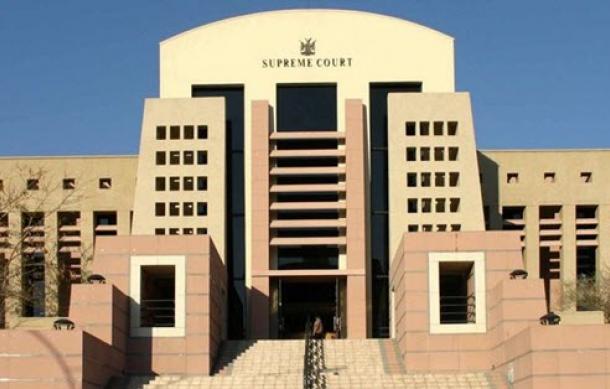
The Supreme Court has overturned a High Court ruling that prevented the National Fishing Corporation of Namibia (Fishcor) from calling Maren de Klerk to testify via video link in its civil case linked to the Fishrot scandal.
In a judgement delivered by Judges of Appeal Dave Smuts and Elton Hoff on 17 December 2025, the court found that the High Court wrongly refused Fishcor permission to lead de Klerk’s evidence remotely, mainly because he is a fugitive from justice with a warrant out for his arrest.
The Supreme Court held that de Klerk is not a party to the trial action and does not stand to benefit from the proceedings but is instead a witness willing to testify on evidence Fishcor says is essential to its case.
Fishcor is suing African Selection Fishing (Namibia) and Seaflower Pelagic Processing, seeking to set aside a scheme of interrelated agreements under which Fishcor would make available 50 000 metric tons of horse mackerel quota per year for an initial 15 years. Fishcor claims the agreements were concluded in a corrupt environment and form part of a broader corrupt scheme associated with the Fishrot scandal. The respondents deny wrongdoing.
The Supreme Court stressed that even though video-link testimony is not expressly provided for in the rules of the High Court or legislation, courts have inherent power to regulate procedure where the interests of justice require it.
It also criticised the High Court for setting the bar too high on de Klerk’s safety concerns, saying the lower court effectively required him to prove that, if extradited, he would not be protected by Namibian police, an onus the Supreme Court said was unreasonable.
The Court further emphasised the public interest in hearing evidence related to allegations of corruption on a massive scale, noting the serious impact corruption has on the rule of law and constitutional accountability.
On the respondents’ procedural objections, the Supreme Court ruled the appeal had not lapsed, finding the record was filed on time under the applicable rule, and granted condonation for late filings on both sides.
The appeal was upheld with costs. Fishcor will pay the costs of arranging the video link, while the first and second respondents were ordered to pay Fishcor’s costs of the application and appeal. The High Court’s order that Fishcor bears wasted costs for the second week of the postponed trial remains in place.
The matter returns to the High Court for trial, where the trial judge will issue directions on how the video-link testimony will be conducted.
Anne Doris Hans-Kaumbi, alongside Senior Counsel Andrew Corbett, represented the appellant.