


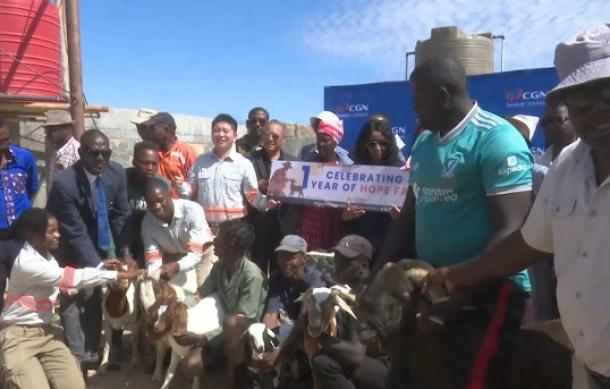
The Swakop Uranium Foundation has officially handed over more than one thousand livestock to resettlement farmers in the Erongo Region, boosting rural livelihoods and food security.
The donation is part of the Hope Farm Project, launched last year.
Less than a year after its launch, the Hope Farm Project, initiated by the Swakop Uranium Foundation, is already transforming lives.
More than 1,000 goats and sheep have been distributed to nearly 50 farmers, many of them women and elderly, across cooperatives in the Erongo Region.
The project is a public-private partnership with the government and follows a revolving model, where farmers pass on livestock to new beneficiaries over time.
"This growth is a strong indicator that the model is working. With the upcoming birthing season expected between April and May, we anticipate even greater productivity and continued expansion of the herd under the revolving system. After an 18-month period, beneficiaries from Phase 1 of the project will be expected to repay the support received by retaining 10 ewes and 1 lamb, says CEO of Swakop Uranium Mine, Luo Wei.
Since July 2025, the herd has grown from 1,000 to nearly 1,300 animals, supported by training, veterinary care, and farming supplies.
Officials say the programme is about more than livestock.
"This is about making a difference in the lives of our farmers who are toiling daily in the heat, in the rain, in the cold, to make sure that they put food on the table. And all they ask from their government is support so that they can move to the next phase. The care you give to your livestock, the discipline you apply within your cooperatives, and the responsibility you demonstrate in sustaining this model will determine how far this initiative can reach, how many more partners can join us, and how many more beneficiaries across all the 14 regions are onboarded, reiterated the Minister of MAFWLR, Inge Zaamwani.
Farmers resettled near Usakos and Otjimbingwe say the impact is already being felt and that responsibility now lies with them to grow the project further.
"Sometimes, people make it sound like you need a degree to do agriculture. But is a practical thing, as you practice you gain experience. Let us help others to start co-operatives," adds Beneficiary of Hope Farm Project, Elfriede Goreses.
The initiative is expected to expand nationwide over the next decade.
The next phase will begin later this year, with more farmers set to benefit in the Omaheke Region.