


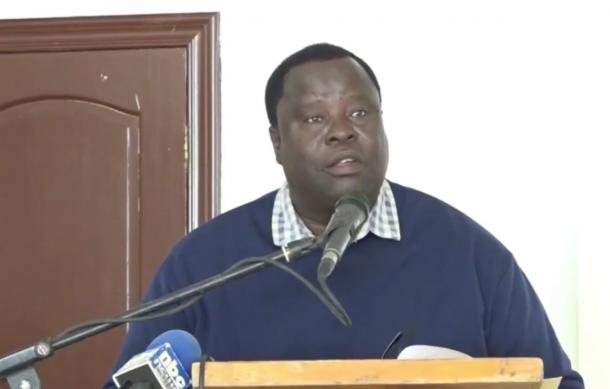
The Parliamentary Standing Committee on Poverty Eradication, Labour and Industrial Relations has commenced its week-long oversight visit to the Omusati and Ohangwena regions.
The committee paid a courtesy call on the governor, which was followed by engagements with the regional leadership, officials, traditional leaders, the councillors and stakeholders.
It aims to assess the implementation and impact of government-funded projects as well as poverty reduction interventions in regions.
"The purpose of this visit is therefore to obtain a clear understanding of the progress made, the challenges experienced in project implementation and the impact these interventions are having on communities. We are particularly interested in understanding whether government-funded projects are achieving their intended objectives of reducing poverty, creating employment opportunities, improving livelihoods and promoting inclusive development," said Uahekua Herunga, the chairperson of the standing committee.
The Chief Regional Officer of the Omusati Regional Council, Gervasius Kashindi, presented an overview of projects.
Kashindi revealed that poverty levels in Omusati currently stand at 50.7%, which is significantly higher than the national average.
Unemployment is estimated at 41.5%, with the majority of those affected being young people.
Despite its population size, the region continues to face challenges such as access to roads, clean water, electricity, healthcare facilities and closure of some schools during the rainy season.
The region has made efforts to support poverty reduction and employment creation initiatives with financial support from government, regional and local authorities and development partners.
"When it comes to the GECWF project in Omusati, we will say the ministry has supported 37 projects out of these 25, 68% of which are still operational, but 32% of the projects went out of operation after support; they were not able to sustain themselves. Many times we are still waiting for the government to come, or sometimes they expect somebody else to come and do work for them.''