


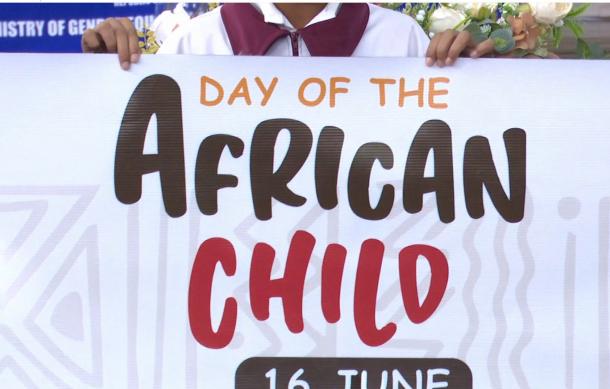
It is time that Africa stop talking about the future while neglecting the needs of children.
These were the words of Rehoboth Mayor Jacky #Khariseb during the commemoration of the Day of the African Child in Rehoboth.
#Khariseb highlighted that the time has come to ensure that every child enjoys access to basic needs and grows up in healthy, safe, and inclusive communities.
“As we commemorate the day of the African child, we must ask ourselves a simple, yet powerful, question. What kind of Africa are we leaving behind for our children? Our theme today, 'Ensuring Universal Access to Water, Sanitation, and Hygiene for Every Child in Africa,' is not merely a developmental objective. It is a matter of dignity. It is a matter of justice. It is a matter of human rights. No child should have to work kilometers to search for water. No child must skip school because they have no proper sanitation facilities. No child should be exposed to diseases because clean water is unavailable. And no child should be denied the opportunity to reach their full potential because society fails to provide the most basic necessities of life.”
To mark the occasion, hundreds of learners took to the streets of Rehoboth on a march commemorating the day and raising awareness about children's rights and well-being.
The Day of the African Child is observed annually to honour the courage of the children who took part in the 1976 Soweto Uprising in South Africa and to promote the rights and well-being of African children.
UNICEF Representative Samuel Ocran urged children to reflect on their dreams and responsibilities and to stay away from activities and violent behaviour.
Speaking at the event, the Deputy Minister of Gender Equality and Child Welfare, Linda Mbwale, says the government has made efforts to improve sanitation, hygiene, and access to clean water across the country.
However, Mbwale says more needs to be done.
"When a child has no clean water to drink, no safe or electric use, or no place to wash their hands, that child's health is present at least. Their education is because they are distracted and their dignity is compromised. Available evidence shows why we must act with agency. In Namibia, the government, through the Ministry of Agriculture, Water, and Land Reform, developed the National Sanitation and Hygienic Strategy for 2022 to 2027.”