


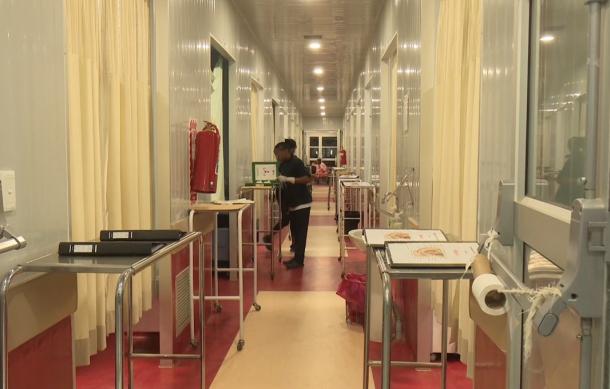
The Ministry of Health and Social Services has taken measures to strengthen readiness and preparedness for disease outbreaks and other public health emergencies.
In collaboration with the Africa Centers for Disease Control and Prevention (CDC), the ministry is hosting a four-day Executive and Operational Training Program to strengthen governance and strategic decision-making for public health emergency management.
The training underscores the importance of national capacities and the entire government approach to ensure effective preparedness and response.
Deputy Executive Director in the Health Ministry Taimi Amaambo explained.
“Frameworks, as I have said, do not save lives. It's the leadership that saves lives. It's our actions that save lives. This executive training is therefore not a technical cause for officers or for the executive; it's a strategic stewardship training for decision-makers.”
Africa CDC’s senior regional representative Dr. Peter Kumpalume also gave inputs.
“In an emergency, panic takes in. We forget what to do. We forget where to go, and we forget what to take or not to. In disease emergencies, we don't want that. We want everybody to know what to do, who to consult, and where to go.”
The Office of the Prime Minister recognises public health emergencies as a critical component of Namibia's national risk landscape, requiring robust coordination and structures.
“Effective management of such emergencies requires robust coordination and structures, timely information sharing, evidence-based decision-making, strong leadership capable of mobilising resources and directing response efforts, and coping efforts under pressure,” explained the Director of the Disaster Risk Management Directorate, Helen Likando.
WHO Country Representative Richard Banda described the Public Health Emergency Operations Centers as central hubs for data transformation, strategy formulation, and real-time resource mobilization.
He further highlighted the importance of trained professionals in saving lives during a crisis.
“It is the trained professionals, the epidemiologists tackling the data, the spotting of trains, the logistics moving the supplies, and the leaders making the hard calls. Without continuous, high-quality training, even the most sophisticated equipment will falter during a crisis.”
Banda added that the aim is to translate the outcomes of the executive leadership training into a smart, actionable national plan for public health emergency management.