


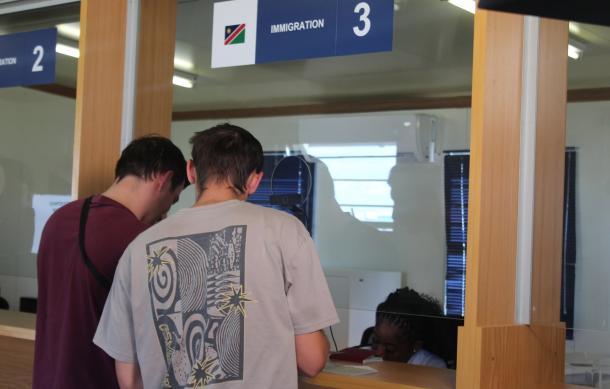
Following the successful implementation of the use of national identity cards as documents for cross-border travel between Namibia and Botswana, authorities in the neighbouring country are using the lessons from the agreement to launch similar arrangements with other countries in the region.
Launched in early 2023 at the now Mamuno One-Stop Border Post in the eastern part of Gobabis along the giant Trans-Kalahari Corridor, the first-of-its-kind arrangement has become a regional model for the free movement of people.
The Permanent Secretary in the Ministry of Labour and Home Affairs, Jimmy Opelo, told the Public Accounts Committee recently that Botswana has started allowing citizens from neighbouring countries, who are within the 100 kilometer radius from the border line, to enter and exit Botswana using national identity cards.
Opelo said the development is a clear demonstration of Botswana's steadfast commitment to promote relations between neighbouring countries and foster social cohesion among citizens, as well as enhancing regional cooperation and integration.
“We are using the similar arrangement we have with Namibia to allow people from South Africa, Zimbabwe, Zambia and other countries who are within the 100 km radius to use national identity cards to enter and exit Botswana. The initiative is aimed at easing movement of citizens within the region. Since Botswana shares land borders with a number of countries in the region, communities on either side of the boundary speak the same language and share a common culture.”
This agreement is part of a broader effort to enhance the efficiency of the Southern African Development Community's transport development corridors and free movement of people, which are crucial for regional economic integration.