


The media plays a crucial role in shaping and influencing the public’s perceptions.
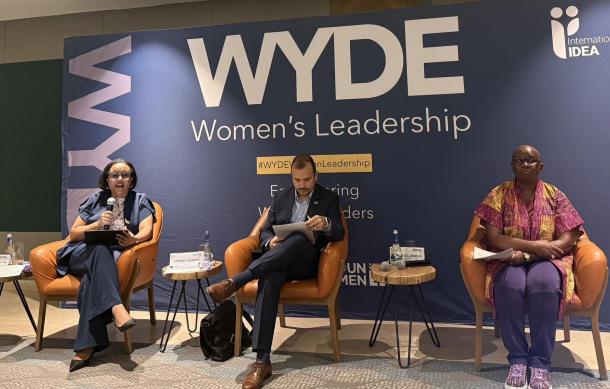
In light of this, players in the media industry gathered at a seminar on Advancing Transformative Gender Social Norms to Enhance Women and Youth Participation and Representation in Leadership and Decision-Making in Rwanda’s capital, Kigali.
Participants said the rapid digital transformation of the media has intensified online violence, harassment and misinformation targeting women journalists, politicians and human rights defenders. This situation has created barriers to their participation in public life.
According to evidence from the latest Global Media Monitoring Project, women account for only 26% of news subjects and sources worldwide, with just 2% of news stories actively challenging gender stereotypes.
Rwanda’s Officer-in-Charge at UN Women, Tikikel Tadele, said balanced reporting can amplify women’s voices, inspire future leaders and strengthen democratic participation.
“Every editorial decision, interview and headline has the potential either to reinforce harmful stereotypes or to challenge them,” Tadele said.
She added that biased reporting strengthens stereotypes, undermines women’s legitimacy in public life and weakens democracy by failing to challenge discriminatory social norms. Tadele said stories reported by women journalists are more likely to include women as news subjects, demonstrating that diversity within newsrooms contributes to more balanced and inclusive public narratives.
International IDEA Principal Adviser on Democracy and Inclusion and WYDE Women’s Leadership Initiative, Rumbidzai Kandawasvika-Nhundu, said the media seminar aims to inspire and strengthen media practitioners’ and journalists’ willingness and capacity to identify, report on and proactively challenge stereotypes and discriminatory social norms.
“The aim is responsible, inclusive and ethical reporting; society is shaped by inequalities. This starts at home; the support is different; some norms hold that women are not good leaders and are too emotional. How are you going to balance? The media hardly ask men those responsibilities?” she said.
NBC News spoke to some journalists who attended the seminar.
Alieu Ceesay, a journalist from The Gambia, said the role of the media is key in changing perception.
“The role of the media is key in changing perception. In many communities, many people still believe that leadership is only for men while women must be in the kitchen and doing domestic work; we are here to debunk that conception,” Ceesay said.
Nithya Pandian, a journalist from India, said she came to learn about social norms and how media in Asia and Africa tell stories and narratives mostly on women in politics.
“I came to know how and learn about the social norms of media in Asia and Africa. How the media tell stories and narratives mostly on women in politics – that is the main thing I take from here,” Pandian said.
The emphasis of the seminar is on the role of the media to promote the transformation of discriminatory social norms and the intersectionality with politics, leadership and decision-making through gender-sensitive and responsive media coverage and narratives.