


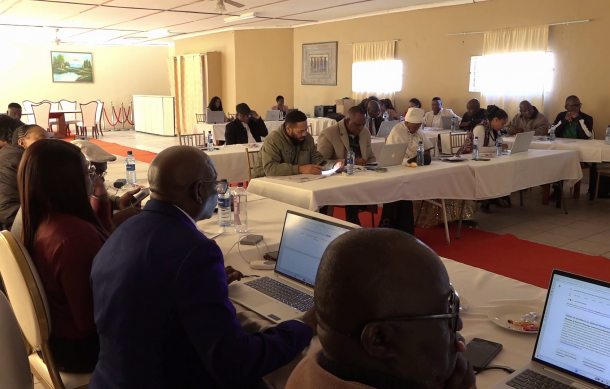
The Parliamentary Standing Committee on Urban and Rural Development and Land Reform is in Gobabis, Omaheke Region, for a capacity-building workshop.
The workshop is aimed at strengthening decentralisation and promoting effective urban and rural development in support of Namibia's Sixth National Development Plan (NDP6).
Members of Parliament, government institutions, regional councils, local authorities and traditional leaders are among the participants attending the workshop.
Decentralisation remains a key government reform aimed at bringing decision-making and public services closer to communities.
In 1997, the government developed and approved the Decentralisation Policy, which was implemented in 2000.
The objective is to improve service delivery, promote sustainable socio-economic development, strengthen local governance and increase public participation in decisions that affect communities.
Tjiuti Hiiko, the deputy director for Legislation and Policy Development in the Ministry of Urban and Rural Development says progress has been made in transferring functions to lower levels of government.
"With regard to the progress of decentralisation so far, the ministry has coordinated the decentralisation of 42 functions from six different line ministries, and these ministries are the Ministry of Education, the Ministry of Works and Transport, the Ministry of Gender Equality and Child Welfare, the Ministry of Agriculture, Information and Communication and Technology and the Ministry of Health. These ministries have delegated their functions."
The workshop is providing an opportunity for stakeholders and the MPs to assess the progress of decentralisation, identify challenges and explore ways to strengthen the implementation of the policy.
The acting chairperson of the Parliamentary Standing Committee, Marius Sheya, says regular reviews are necessary to determine whether decentralisation continues to achieve its intended objectives.
"It's very important that after a certain period of time, obviously as a team you come together, um, to assess what you have done, um, and what some of the bottlenecks are. Because when you are doing policy initiation, when you are enacting a law, you probably do not anticipate there and then the effects it would have at that particular time. But over time, I think it's very necessary because you want to see, are we still with the initial idea of why we have formed this particular law, why we have come up with this particular policy, and what has brought us to this workshop to really dissect with our stakeholders different OMAs? What is this decent realisation, progress and track of what we have achieved?"
Despite progress made, challenges remain, particularly around capacity, resources and decision-making authority at the local level.
Hiiko noted that improving awareness, strengthening legislation and ensuring stakeholders understand their roles are among the measures needed to advance decentralisation.