


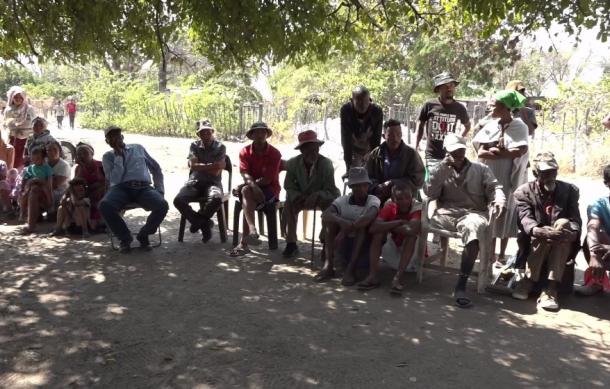
The Deputy Minister in the Office of the Vice President's Marginalised Division, Moses ||Khumub, has reaffirmed the government's commitment to improving the living conditions of indigenous minority communities during a visit to Duwib Resettlement Farm in the Otjozondjupa Region.
The visit followed a letter submitted by the Duwib community to the Office of the Vice President, requesting government intervention on challenges including poor road access, water shortages and other socio-economic issues affecting residents.
||Khumub said the government wants development planning to be guided by the needs of communities on the ground rather than decisions made from offices in Windhoek.
Residents said they have the knowledge and experience needed for agricultural activities but lack the resources to kick-start farming projects.
||Khumub explained that agriculture is a national priority.
‘Remember, the government and the president are prioritising agriculture because of it broader benefits that it gives to the community. Just give us the leverage that if we are to propose a project in that area, we know people like Miss Magdalena are there and they have the skills.”
He also encouraged residents to explore tourism as a source of income.
“Given that Duwib is strategically located between Etosha National Park and Mahango Game Park on the Divundu side, there is a steady flow of people travelling from here to the Kongola area and on to Botswana. It is a lucrative and highly viable business opportunity due to the inflow of tourists. It's a spot-on decision.”
Otjozondjupa Governor John ||Khamuseb stated that food self-reliance is key.
“We can learn and do our things the professional way, and once the government helps us with 15 hectares so that we can produce our own food. I want to take the example of the Chief of the Ondonga, who early this year put 20 thousand hectares under an irrigation scheme and planted potatoes, and the potatoes have become a turning point of horticulture in the Ondonga area.”
Duwib Farm's Chief Johannes Gawiseb stressed that there is a need for equipment.
“To start off with this project we need tractors, water pumps, irrigation systems, cultivators, sprayers and transport equipment so that the farm is able to uplift itself."
He also called for improved water infrastructure and better services, saying these are essential for the development of the community.
The assessment visit forms part of the government's ongoing engagements with indigenous minority communities to identify challenges and ensure their development priorities are reflected in national planning.