


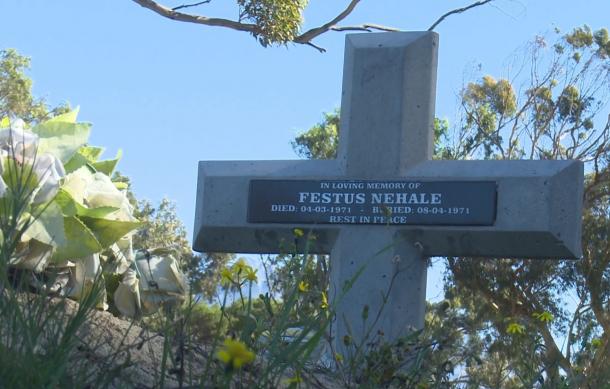
A Namibian delegation comprising officials from the University of Namibia (UNAM) and the Ministry of Education, Innovation, Youth, Sports, Arts, and Culture is in Cape Town, South Africa, conducting verification of liberation icons who died there.
Nehale died in South African custody in March 1971 and was buried at Maitland Cemetery.
Niilenge died three years later, in March 1974, and was buried at the Gugulethu cemetery.
Both men had been imprisoned on Robben Island during the apartheid era for their involvement in Namibia's liberation struggle, and their return comes after more than five decades.
The exhumation is carried out as part of an agreement between Namibia and South Africa to return the remains of Namibians who died in exile and were buried in South Africa.
Before the graves are opened, families and representatives of traditional authorities are expected to conduct cultural rituals at the burial sites.
For now, the dates are set for Thursday and Friday pending the approval of the required legal permits.
This morning, UNAM officials conducted verification of the remains.
Eighty-four other Namibian human remains were also identified as being here in Cape Town's Iziko museum.
Officials involved in the process have, however, indicated that the number could increase as the work continues.
The story of Nehale and Niilenge is tied to the history of Robben Island, where Namibians were imprisoned alongside South African political prisoners during the apartheid period.
South Africa's Department of Sport, Arts and Culture says the Robben Island Wall of Remembrance now carries the names of 2 717 former political prisoners, while Namibia and South Africa have continued cooperation around the preservation of this shared liberation history.
The Minister of Education, Innovation, Youth, Sports, Arts, and Culture, Sanet Steenkamp, is expected to formally receive the remains from South Africa's Minister of Sport, Arts, and Culture, Gayton McKenzie.
The planned reburial forms part of Namibia's 2026 Heroes' Day programme.