


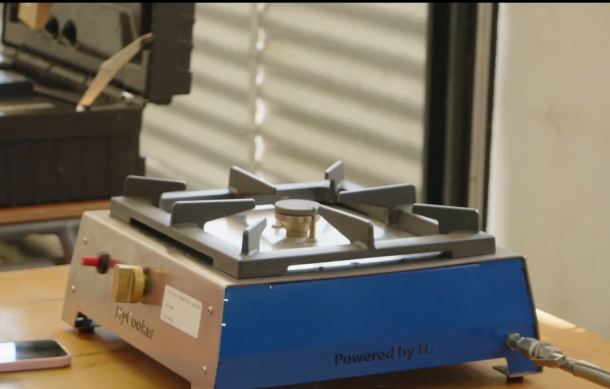
Namibia's green hydrogen ambitions are extending beyond large-scale industrial projects, with research now exploring how the clean energy source could be used in everyday applications such as cooking.
The Namibia University of Science and Technology (NUST) is collaborating with HyCooker B.V. of the Netherlands to strengthen the link between research and education and Namibia's broader green hydrogen development.
The collaboration follows a visit by representatives of HyCooker B.V. to Namibia during the Hydrogen Summit in Swakopmund.
The HyCooker is a prototype cooking device designed to use green hydrogen as fuel, with the potential to provide a cleaner alternative to conventional cooking fuels.
The Mechanical Engineering and Green Hydrogen Research Cluster Coordinator at NUST, Samuel John, said the prototype is not yet ready for commercial use and requires further research and testing.
"We are discussing a very unique invention, the HyCooker, which is a stove that uses hydrogen for cooking. However, this is still a prototype, so you cannot simply walk into the market and purchase one yet. This is why we are in the lab, as we continue our research."
The project is also aligned with Namibia's domestic green hydrogen value chain.
Beyond potential exports and industrial applications, the technology could open opportunities for using green hydrogen in local energy applications, including clean cooking.
HyCooker produces a hydrogen flame without the smoke and emissions associated with traditional solid fuels.
It also contributes to reducing reliance on wood and charcoal.
HyCooker B.V. CEO Nienke Homan explained, "In the Netherlands, we have different conditions, and we recognised the need to test the HyCooker in Namibia. The local conditions may vary, and the components could differ as well. Therefore, it is essential to develop and manufacture the product in the region where it will be used, ensuring it is utilised safely. This is the primary objective: to adjust the design for safety and security, and to manufacture it in Namibia for Namibia."
For NUST, the collaboration provides an opportunity to combine academic research with practical technology development.