


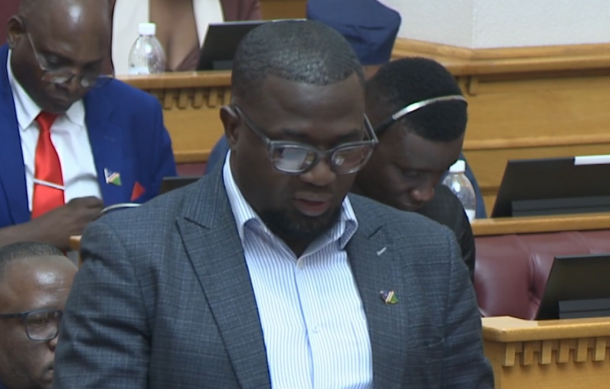
The Leader of the Independent Patriots for Change (IPC) in the National Assembly says land access must be accompanied by productivity, accountability and market integration to contribute meaningfully to food security.
Immanuel Nashinge made the remarks while contributing to a motion on the approval of the Land Reform Advisory Commission. He said the current framework had prioritised symbolic political restitution while largely neglecting agricultural productivity.
“Committing 5,000 hectares to an individual who lacks capital results in paralysed land,” Nashinge said.
He proposed restructuring land allocation around aggregated farming schemes that group beneficiaries and enable the state to provide centralised solar-powered water abstraction, cold-chain storage, feed mills and mechanisation hubs.
Other MPs also contributed to the debate.
Winnie Moongo of the PDM said the proposed three-year term of the commission should be reconsidered, arguing that land reform is a long-term national programme.
“Three years may not be sufficient for a commission to develop institutional knowledge, investigate complex matters, make recommendations and assess whether those recommendations produce results,” she said.
Swapo Party MP Modestus Atshipara said failure to appoint the commission’s members would delay land reform and justice.
IPC MP Armas Amukoto said land in Namibia is more than a piece of property, as it is connected to the country’s history, livelihoods, communities, economic opportunities and the future of its children.
His party colleague, Vilho Ihembu, said land reform is a sensitive matter that requires commissioners with wisdom, independence, technical knowledge and practical solutions.
NUDO MP Vetaruhe Kandorozu called on the government and the commission to ensure that generational farm workers are not evicted from the farms where they have worked.
IPC MP Elvis Lizazi said the commissioners should undertake familiarisation visits across Namibia to understand the communities affected by land reform.
Swapo Party MP Paula Kooper said making land accessible and productive could contribute to job creation, household incomes and food security, while reducing poverty.
IPC MP Roderick Likando said the commission should consider a beneficiary’s farming experience, intended form of production, water and infrastructure requirements, available financing, access to equipment, technical support and the expected period before a farm becomes productive.
Another IPC MP, Bertha Nghifikwa, said land reform could no longer be viewed only through the lens of historical redistribution.
“It must be tied directly to economic productivity and technical skills development,” she said.