


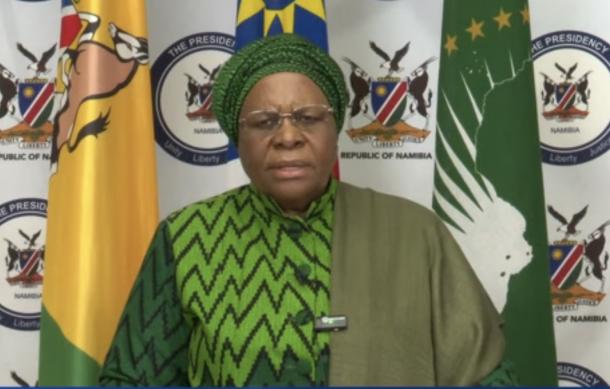
President Netumbo Nandi-Ndaitwah says the government will continue assessing the impacts caused by the Foot and Mouth Disease (FMD) outbreak and is engaging relevant stakeholders to prevent the outbreak from causing prolonged financial distress.
As of 5 October, surveillance teams had inspected 29,313 animals across 68 farms, with 127 confirmed positive cases recorded on 15 farms.
The government has intensified measures to contain the foot-and-mouth disease outbreak in the Karasburg Veterinary District of the ||Kharas Region and protect Namibia's livestock and meat industry.
Twenty surveillance teams have been deployed, while 10 roadblocks have been established across the ||Kharas Region to strengthen disease control and monitor the movement of livestock.
Addressing the nation, President Nandi-Ndaitwah said the Cabinet has approved a Critical Containment Response Plan, which includes establishing a containment buffer zone around Karasburg to prevent the disease from spreading to unaffected regions.
The plan also provides for repairs to the Namibia-Botswana border fence and the erection of veterinary cordon fencing in high-risk areas along the South African border.
The President says the livestock and meat industry is a cornerstone of Namibia's economy, supporting farmers, workers, transporters, processors and exporters.
She acknowledged the financial strain caused by movement restrictions and trade disruptions, including pressure on farmers and businesses servicing loans.
"For many families, this uncertainty concerns their next income and their ability to sustain their livelihoods. These concerns must remain central to our response. The measures we take now are necessary to prevent wider losses and safeguard the industry's recovery. We are also mindful of the financial pressures on farmers and businesses servicing loans with financial institutions. Government will continue to assess these effects and engage relevant stakeholders to ensure that this animal health crisis does not lead to prolonged financial distress for otherwise viable farmers and businesses."
Dr. Nandi-Ndaitwah also said the government is engaging the European Union over meat consignments produced before the outbreak was confirmed on 23 September.
She says consignments certified by Namibia's Veterinary Competent Authority before confirmation of the outbreak are likely to be permitted entry under EU legislation.
"We will provide our partners with verified information and uphold international veterinary requirements. Maintaining confidence in our veterinary systems is essential to protecting Namibia's reputation as a reliable producer and exporter. We will also continue pursuing opportunities to diversify and strengthen our export markets."
The President has called on livestock owners, traders, transporters and auctioneers to comply with movement restrictions, cooperate with veterinary teams, and ensure livestock identification and movement records are accurate.
She noted that Namibia's Livestock Identification and Traceability System remains critical to tracing potentially exposed animals and supporting disease-control decisions.