


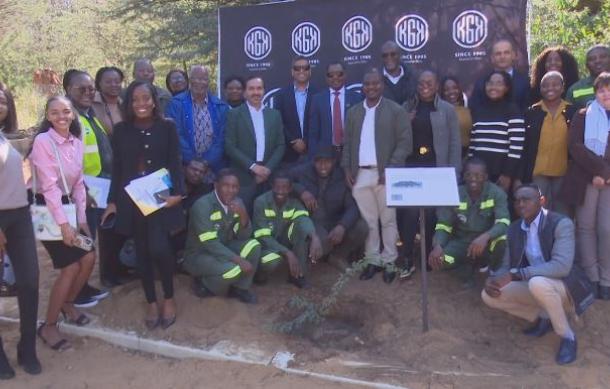
This year's World Environment Day commemoration underscores the urgent need to address the escalating crisis of plastic pollution.
The Environmental Investment Fund collected N$90 million in revenue from environmental levies over the period between 2022 and 2024.
The environmental levies were introduced under the Customs and Excise Act of 1998, with the aim to promote sustainable behaviour, reduce environmental harm, and generate funding for environmental conservation.
These levies are collected on the sale of plastic bags, tyres, oil and lubricants, batteries and carbon emissions.
"We have set up a facility that is called the Green Impact Facility, which seeks to give assistance to small enterprises, even microenterprises, in terms of concessional loans, and with this we have created at least 950 jobs but also invested in sectors that are about conserving the environment."
The investments under the Green Impact Facility are in the areas of waste management and recycling, renewable energy, sustainable tourism and agriculture initiatives, green technology innovation, and natural resource management, as well as value addition.
This year's World Environment Day commemoration underscores the urgent need to address the escalating crisis of plastic pollution.
The EIF reaffirmed its commitment to environmental preservation and protection through the reinvestment of revenues to curb plastic waste.
The Manager of Corporate Communications at EIF, Romeo Muyunda, said, "I think for us as the EIF, plastic pollution is seen as an eyesore that is affecting our reputation as a country, and also in line with that, the EIF is busy now developing what we call an investment plan for levies that we have collected. Part of this investment plan, what we are proposing there once approved, is to look into ways we can reduce some of this plastic waste in our streets, e.g., we want to assist local authorities in developing proper landfills."
In its investment plan, the EIF also wants to invest in mobile recycling stations and public awareness campaigns and implement incentive schemes related to plastic waste recycling facilities.
In 2018, Namibia banned the use of plastic bags in national parks and protected areas, while in 2019, it introduced levies on plastic bags.
All these are efforts aimed at discouraging the use of single-use plastic bags, reducing plastic pollution, and encouraging consumers to use alternative, reusable bags.