

Commonwealth nations can unlock about N$22.3 trillion in additional trade through the adoption of electronic transferable records and comprehensive legal reform.
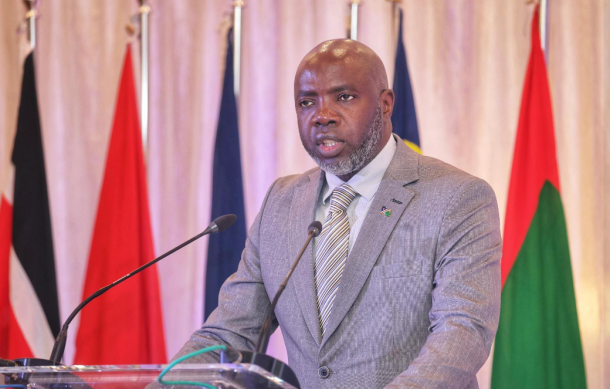
This was revealed by MICT's Executive Director, Audrin Mathe, while providing insight on the discussion of paperless trade at the Commonwealth Business Summit.
Electronic Transferable Records is the process of creating, storing and sending trade papers digitally, making the process of trade faster, safer, and cheaper.
However, for this to be possible for the Commonwealth, there is a need for comprehensive legal reform that will update the laws of the Commonwealth to legally accept and trust digital trade documents.
According to the International Chamber of Commerce, it is estimated that about four billion paper-based trade documents are processed globally at any given moment.
These documents represent significant economic barriers, particularly impacting developing economies and small island developing states within the Commonwealth family.
"Digital systems eliminate bottlenecks through parallel processing, automated validation and real-time information sharing. Realising the potential of digital trade requires comprehensive legal reforms to establish the necessary regulatory frameworks for electronic transactions. The United Nations Commission on International Trade Law's Model Law on Electronic Transferable Records provides the foundational framework for this transformation."
He noted that the successful paperless trade implementation will require robust technological infrastructure support that is secure, reliable and interoperable for digital transactions.
Dr. Mathe pointed out that blockchain technology, which is like digital record books, has proven to offer enhanced security through cryptographic protection, smart contract automation and immutable record-keeping.
"The potential benefits, such as US$1.2 trillion in additional trade, 75% cost reductions and dramatically improved efficiency, are achievable targets supported by comprehensive research and successful international examples."
A Senior Director of Economic Development, Trade and Investment in the Commonwealth Secretariat, Dr. Ruth Kattumuri, called on all Commonwealth member states to commit to this digital transformation and to support the necessary legal reforms.
"Where are we today? Before Covid we had technology, and it was sitting there, not tested, but Covid forced us to rapidly accelerate into the technology world as we progress and continue to progress rapidly as one digital world, and in this world technology is a core driver for achieving our sustainable and resilient development in this journey, ensuring essential regulatory frameworks are crucial."
The discussion focused on how digitising trade documents can reduce costs, improve efficiency, and enhance transparency across Commonwealth nations.