


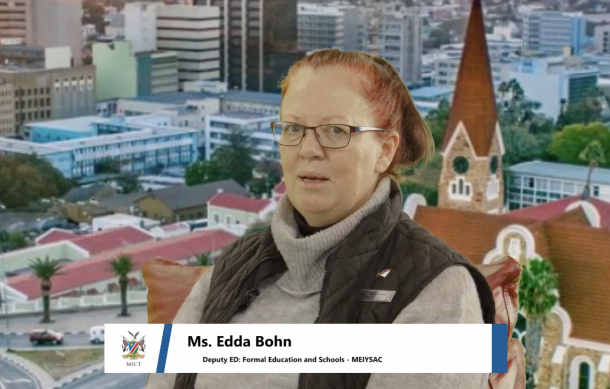
The Ministry of Education, Innovation, Youth, Sports, Arts and Culture (MEIYSAC) is joining the continental push to end learning poverty, defined as the inability of children to read and understand a simple, age-appropriate text by the age of 10.
The education ministry launched the "End Learning Poverty For All in Africa" campaign in Windhoek.
Backed by the African Union and international development partners, the initiative aims to address the growing crisis in foundational learning outcomes among school-aged children.
Speaking at the Government Information Centre, Deputy Executive Director Edda Bohn said Namibia, like many African countries, is falling behind on reaching the Sustainable Development Goal targets related to learning outcomes, despite noted progress in access to schools.
Bohn revealed that a recent national baseline assessment of Grade 3 learners showed only 28% met minimum literacy standards, while 32% achieved the expected level in numeracy.
She said these figures reflect a deeper systemic issue, as earlier national standardised tests for Grades 5 and 7 in English, Mathematics and Physical Science already showed substandard learner achievement.
The campaign is thus a national call to action to ensure children can read, write, and perform basic arithmetic by the end of junior primary.
Bohn warned that learners struggle to advance academically.
Currently, only between 25% and 29% of learners qualify to continue to the AS level, the academic stream needed to access university education.
This small proportion, she noted, mirrors the limited access learners had to early childhood development and pre-primary education, which is critical in the formative years.