


According to research conducted by the City of Windhoek, about 86% of Windhoek residents are low-income earners and cannot afford cars.
Of this 86%, 52% cannot afford public transport services.
For this reason, the Business Development Officer for Urban and Transport Planning in the City of Windhoek says there is a need to prioritise sustainable urban mobility to ensure that people are not left out of development.
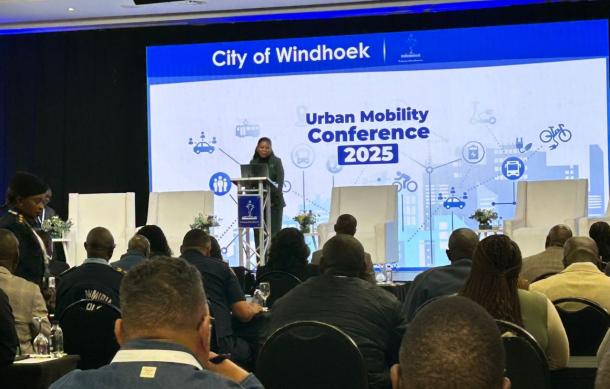
Speaking at the Urban Mobility Conference in Windhoek, Prisca Mayumbelo revealed that, on average, 24% of these low-income individuals’ income is spent on mobility services.
She noted that if urban mobility is not addressed, the city’s residents could face increasing challenges such as inaccessibility to the CBD, longer trip durations, traffic congestion, high accident rates, and poor air quality due to pollution.
She also emphasised that as urbanisation increases, there is an urgent need to take action and address mobility issues.
Currently, only 1.7% of Windhoek’s population uses public buses owned by the City of Windhoek.
Mayumbelo called on transportation stakeholders to work with the City of Windhoek in fully implementing the City’s Sustainable Urban Transport Master Plan, a 20-year plan aimed at transforming mobility services in the city and surrounding towns.