


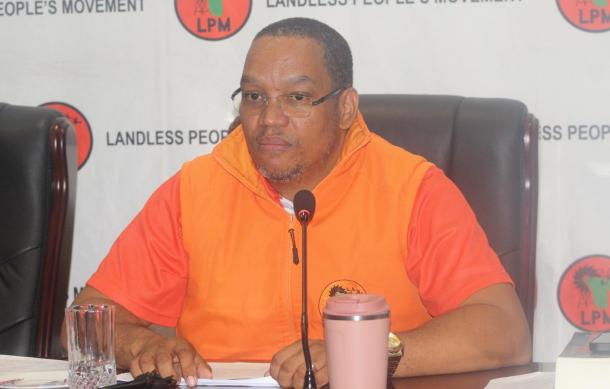
The Leader of the Landless People's Movement (LPM), Bernardus Swartbooi, has criticised the State for allegedly keeping accused persons in the Fishrot corruption case in custody for extended periods.
Swartbooi said the accused should be released if the State lacks sufficient evidence to secure convictions.
Speaking at a media conference, Swartbooi criticised the fact that the case has been ongoing since 2019.
"Then they keep Fishrot people for so long. If the government, if the state, does not have a case against Shangala or against Essau, they must release these people. Because they seem to be arresting people left, right, and centre without having conclusive, reasonable evidence that can lead to a conviction. Why do you keep people in prison when the state cannot finalise their case, gather a conviction, and move on?"
However, the accused, particularly the former Justice Minister Sacky Shanghala, filed multiple legal applications over the years.
The group has collectively filed more than 25 interlocutory applications.
Shanghala filed several requests to have the late Judge Moses Chinhengo recuse himself, which were refused, and sought to halt parts of the trial or void pre-trial rulings.
Hatuikulipi and Esau submitted applications to access frozen funds under the Prevention of Organised Crime Act for the purpose of covering legal expenses.
The group also sought to be tried separately, delay trial dates, or prevent transfers within correctional facilities.
The State has repeatedly accused the defendants of using these applications to delay proceedings.
When requested to clarify Swartbooi's criticism, LPM national spokesperson Lifalaza Simataa said the concern is not about technical legal filings but the principle of justice.
Simataa questioned how the State can be trusted if, according to him, justice is delayed at the whim of those arrested.
He clarified that the LPM's argument is about ensuring progress in the justice system and holding the State accountable for executing justice once arrests have been made.
Judge Marelize du Plesies has scheduled the trial to start in November, but Shanghala has again filed two applications, one to the Supreme Court and another for leave to appeal to the High Court.