


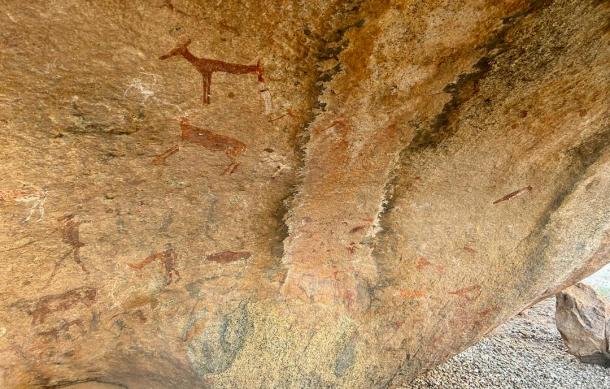
With Namibia rounding off Heritage Week last month, the National Heritage Council (NHC) has announced that it is preparing to nominate Brandberg for inclusion on the UNESCO World Heritage List.
Namibia currently has two sites inscribed on the UNESCO World Heritage List.
Twyfelfontein, located in the Khorixas Constituency of the Kunene Region and listed in 2007, and the Namib Sand Sea, which includes Sossusvlei and was added in 2013.
The cultural site of Twyfelfontein |Ui-||aes with ancient rock engravings and the natural site of the Namib Sand Sea, a unique coastal desert with vast sand dunes.
Twyfelfontein features thousands of rock engravings created by hunter-gatherers thousands of years ago, while the Namib Sand Sea is the only coastal desert in the world with high dunes, showcasing extraordinary natural adaptation.
The NHC is now preparing to nominate Brandberg, Namibia's highest mountain and a site of significant archaeological and spiritual importance, as the country's next recognised World Heritage Site.
The nomination is expected to be submitted by February 2026, with hopes that the inscription will be approved by 2027.
The council said the move forms part of ongoing efforts to preserve Namibia's tangible and intangible heritage while promoting national pride and cultural identity.
Erica Ndalikokule, the Director of the National Heritage Council of Namibia, further reminded citizens that heritage protection is a shared responsibility.
"Yes, in our individual capacities we are obliged to contribute something. The legislation enables individuals also to nominate; therefore, whatever you know in your surroundings, get in contact with us at the National Heritage Council so that we can take the process further. If you find a resource, you identify a resource somewhere that is under threat of whatever kind."
Intangible heritage such as storytelling, folklore, and language also needs to be preserved, Ndalikokule added.
"It's your responsibility as a Namibian to pass on something to future generations. Firstly, starting at home, language is a vehicle for transmitting our heritage. It's very important because sometimes when you are talking, for instance, in storytelling or folklore, it's always best when you speak in a local language. But if children do not speak their languages, how are they going to be able to pass on this important intangible heritage to them for them also to pass on to their generations? So everyone, every individual, has a responsibility, and let us come together and fulfil this mandate."
The NHC urged the public to unite in protecting and promoting Namibia's diverse cultural and natural heritage for future generations.