


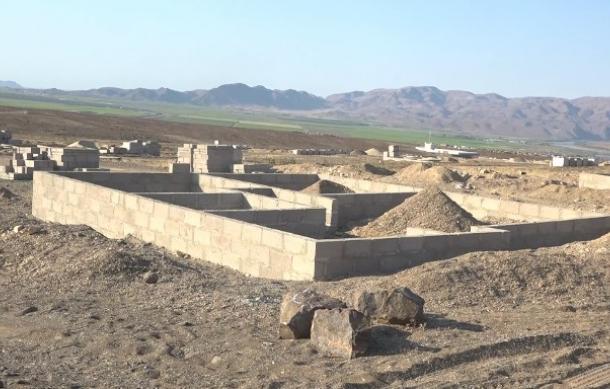
In an effort to address the shortages of housing at Aussenkehr, the Namibia Grape Company (NGC), in partnership with Cape Span, will start with the first phase of constructing 76 farmhouses for employees.
N$3 million was made available for the first phase of the housing project.
Farm Aussenkehr lies on the banks of the Orange River in southern Namibia, 24 kilometres downstream from Noordoewer.
The source of employment here is the production of table grapes, which are primarily exported to Europe and other parts of Africa.
The seven grape-producing companies employ approximately 20,000 Namibians. Of this number, the Namibia Grape Company employs approximately 1,700 workers.
The farm's current accommodation facilities are inadequate, forcing some workers to share.
For more than 70 farmworkers, this could soon be a thing of the past as the NGC kicked off with the first phase of housing construction.
Gideon Nuunyango, Managing Director of the NGC, explained how this process will be implemented.
"We are building houses for NGC employees—76 houses, specifically— and we are going to build them in three stages. The first stage is to build the foundations, then we will come to the walls and the roofs, and the last one will be water and electricity. If those services are available in the area we are building, the housing project is going to cost around three million."
There will also be prepaid water points where people can have access to clean water.
"We are also going to do the project of water tanks to give all our employees water tanks. It's a thousand litres, which will be filled by trucks, and it's 230 tanks. It will cost the company N$410,000."
Communal ablution facilities for farm workers are also on the cards.
"That will be 70 in numbers, then each one will be allocated to five families in the location. It's a dry pit; they don't use water, just chemicals that you use because of an inadequate water supply in the location. The ablution is costing the trust N$1.8 million."
Harvesting for table grapes at Aussenkehr will start early November and continue until the second week of January, requiring an estimated 2,000 seasonal and 300 permanent workers.