


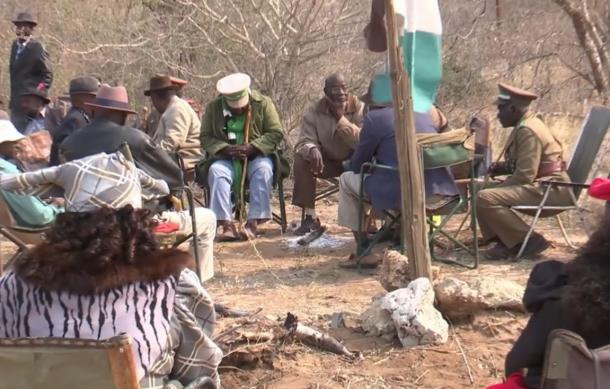
At sunrise in Gam, a soft wind drifts across the expansive plains of Otjozondjupa Region. For many residing in tents and temporary shelters, this breeze carries more than dust, it brings memories, loss, and ultimately homecoming.
These are Namibians of Botswanan descent returning to their ancestral homeland, families whose roots are in Namibia, even though generations have lived across the border.
Among them is Justice Muinjo, born in Tsau, Botswana, 72 years ago. He, along with 98 others, made the journey back to Namibia in September last year.
"Home is something very important that one should look at; as we stayed in Botswana, we have always regarded ourselves as Namibians, and our forefathers never gave up saying they were Namibians, and we were brought up just knowing we are Namibians," says Muinjo.
Coming back to Namibia is not a migration of convenience; it is the closing of a circle that began more than a century ago.
"We were a big number when we started, but many people decided to drop because they were told not to come with their animals here because of the area where there was foot and mouth disease. That's how we ended up becoming a smaller number," adds Huurah Tjetjoo, also a repatriate and now a Gam resident.
Most are farmers who have children on foreign soil.
Even as stories of Namibia were carefully preserved in language, custom and memory, they believe coming home has been the best decision they've made.
"The spirit of being a Namibian and not losing it was in fact planted in us by our parents; it's in the same way we can't say that that spirit did not force us to come back, because it's now in us for sure. So, we felt it was high time we went back because otherwise, at the end of the day, we will lose the language and lose everything we have that makes us who we are. We wanted to remain who we are; in fact, that's one of the reasons that led us to come back," stressed Muinjo.
Huurah expanded, "I was a teacher; I thought for a number of years and became a school head. I left and decided to come to Namibia; my parents are here. They were expatriated and were the first group to come to Gam. And, by then, I was still teaching and still young and didn't think of coming to Namibia. Like what the gentleman said, because of visiting Namibia time and again, I developed the interest to come back to Namibia. I am also married to a Namibian woman I found here, and I brought one of my children, and the other one is still at the University of Botswana."
"I left all my children behind and am still in touch with them, but it is my hope that maybe they said, 'Let him go; we will see how he is going to settle because the same thing I had is in them. Hopefully, they will come,'" expressed Muinjo.
Last year, 98 people were repatriated to Namibia. Of that number, 3 have since died at the settlement.
At Gam, daily life has tested the promise of homecoming.
Officials of the Ministry of Agriculture, Forestry, Water and Land Reform (MAFWLR) visited the area recently and held discussions with the community.
Efforts, authorities say, are already in place to relocate them permanently to an area about 130 km away from where they currently are, at Okupaheua.