


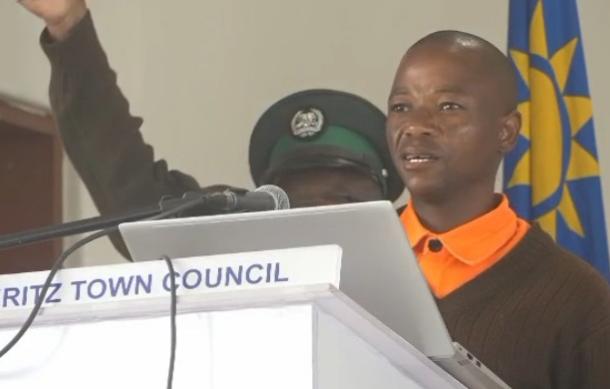
A rehabilitated inmate, Wilfred Dreyer, who is currently serving time at the Lüderitz Correctional Facility, urged young people to stay away from drugs, crimes and gang activities.
He shared his life story about how drugs destroyed his life during the celebration of International Women's Day in the southern town.
Dreyer said he became involved with the notorious Numbers 26 and 27 gangs, whose members are often forced to commit crimes such as robberies and house break-ins as initiation rites.
He warns young people not to be misled by gang culture, saying simple gestures or greetings used by gangs can signal violence.
"The way you speak changes when you become part of the Numbers; even the way you greet people changes. Everyone knows the sign means 'njta', but within the gangs it is called a 'stoepa'. Young boys think it is just a greeting, but in the gang it can be a signal to stab someone or attack them. It is also a sign used by the 28 gang. I encourage young people to greet others normally and not get involved in these gangs."
He said prison programmes and Bible studies helped turn his life around, as he now stands as a changed man.
"I learned the difference between right and wrong. I also joined a second programme where I learned how to pray. When I was a gangster, I never prayed, but now I read the Bible and pray every day. Thanks to the officers who made an effort to help me find my way, today I stand as a changed man."
Drawing on his past struggles and self-reflection, Denzil de Beer, a facilitator of the Break the Chains support group in Lüderitz, shared his experience. He urged the communities to create supportive spaces for people battling with addiction, noting that true transformation does not happen in isolation.
"It required community people who believed that restoration is possible, even if someone has fallen short. Through faith support structures and deliberate actions, I transitioned from a place of instability to a place of purpose."
The First Gentleman, Epaphras Ndaitwah, described the testimonies as moving and urged communities to accept and support rehabilitated individuals as they prepare to reintegrate into society.
"It's touching; they believe they were on the wrong side, and now they are rehabilitated. They went into hiding and became rehabilitated and came out openly, and I want us to accept them as part of our society."