

Namibia's archives and records management sector is facing significant challenges that could threaten the preservation of the country's history and institutional memory.
This was revealed by the Ministry of Education, Innovation, Youth Sports, Arts and Culture's (MEIYSAC) executive secretary, Erastus Haitengela, during an International Archives Weeks commemoration.
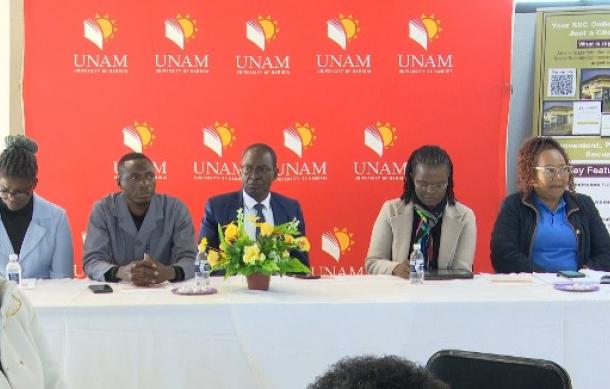
The International Archives Week celebrated under the theme 'Archives for Justice: Rights, Memory and Future' was held in the capital with Haitengela's speech read on his behalf by acting director of the Namibia Library and Archives Service (NLAS), Namutenya Hamwaalwa.
"One of the most present concerns is that the role of archives in records management is still not adequately understood or recognised across many institutions; records are often viewed as an administrative function rather than a strategic component of governance."
Haitengela stressed that people who are not trained in records management will dispose of documents without knowing what they are destroying and without authorisation to destroy them.
"Most of our storage facilities for records are inadequate, the systems are fragmented, and the valuable information is at risk of deterioration, loss or inaccessibility."
The NBC's Chief of Human Resources and Administration, Gerson Kamatuka, says archival material is essential to safeguarding the country's collective memory and proving the institution's role in documenting the nation's history.
Kamatuka further states that archives remain critical in ensuring that important national events are accessible to future generations.
"So archives at NBC are not simply all the recordings on our servers. They are part of the living memory of the Namibian nation; it depicts what Namibia has been doing over all the years, free and after independence. Archives preserve Namibia's history, culture, development and democracy."
Head of Archives at the National Archives, Damian Hangula stresses that proper record-keeping is essential for transparency, accountability and preserving the country's documentary heritage.
Hangula notes that the mandate of national archives is for archival preservation and prosperity, but not only for paper but also for audiovisual.
"The national archive has a qualified archivist therein that can be able to assist you to locate the information you are looking for, and all research and user service happens at the national archives."