


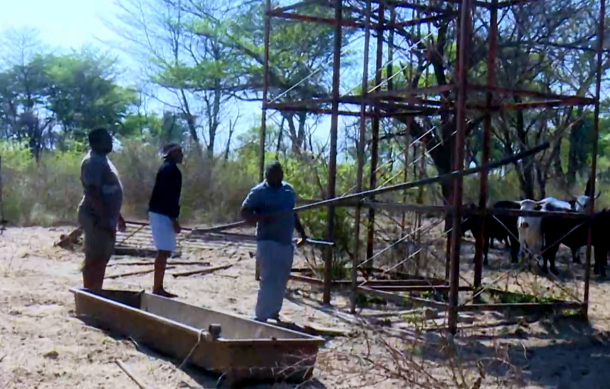
The Sachinga Livestock Development Centre in the Zambezi Region is appealing for urgent government intervention following damage to infrastructure caused by elephants.
The elephants damaged fencing, water infrastructure and disrupted livestock breeding programmes over a nearly three months period.
Farm Manager Simasiku Simwanza says repeated repair efforts have been undermined by continued elephant activity, allowing livestock to move between breeding categories.
"Our fence has been severely damaged and has brought impact to our livestock because we are having stud breeds here. So the purpose was that we need to run our programme as planned, but now, as I am speaking with you, our programme has been disturbed because our animals are mixing from one category to another."
Simwanza added that limited funding for routine bush clearing and firebreak maintenance has resulted in thick vegetation along the corridor fence, restricting access for workers to inspect and repair damaged areas.
The centre said they have repeatedly reported the matter to the Ministry of Environment, Forestry and Tourism but claim it is still awaiting meaningful assistance.
"Since that time, we have never seen an impact. All the time we report, and they come to assess, but there is no outcome or assistance. So I even wrote a letter supporting our statement and our concerns to them. So we are still waiting up till now. We never received a proper answer from them."
Beyond the damage to the infrastructure, the elephant presence has also raised safety concerns for learners attending school from the farm, with parents and staff members reportedly having to escort children in the mornings and afternoons.
The control warden for Wildlife and National Parks in the Zambezi Region, Mulife Muyoba, confirmed that the ministry has noted the extensive damage to the farm caused by elephants and thus far has submitted a request to the minister, seeking approval to put down one elephant as a deterrent.
Muyoba added that efforts to drive the elephants away may not provide a lasting solution, as there is a likelihood of them returning to the farm.