


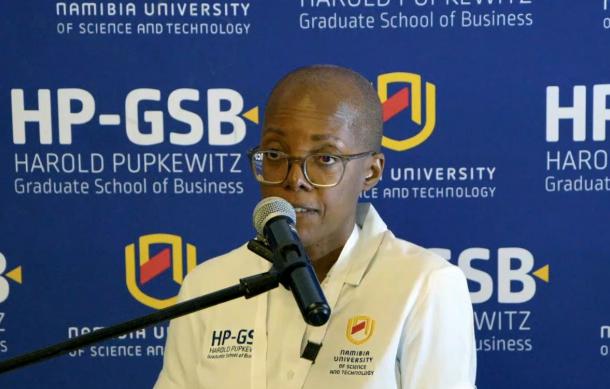
The Namibia University of Science and Technology (NUST) launched the first-ever International Conference on Finance and Sustainable Business in Windhoek.
The two-day conference, held under the theme "Accelerating Global Green Transition Through Green Business Management for a Sustainable Future", coincided with NUST's 10th anniversary.
The delegates came from across the continent, including South Africa, Botswana, Zimbabwe, Nigeria, Zambia, and Ghana, as well as the UN.
Delivering remarks on behalf of the UNDP, Programme Specialist Irish Goroh called for integrated and inclusive solutions to address complex sustainability challenges.
She drew attention to the global financing gap for sustainable development, noting that only US$5.2 trillion is available, despite Official Development Assistance commitments.
"In Africa alone, the SDG financing gap exceeds USD 200 billion annually, a situation worsened by financialisation that diverts capital from productive sectors to speculative markets – while renewable energy, resilient infrastructure, and climate-smart agriculture remain severely underfunded as priorities for most of our African countries. This imbalance underscores the complexity of sustainability: resources are growing too slowly compared to the needs on the ground."
She stressed that education, innovation, and technology must remain at the heart of Africa's green transition, adding that sustainability goes beyond compliance and requires solutions that uplift both people and processes.
Finance Minister Ericah Shafudah said Namibia remains aligned with global frameworks, including the United Nations' 2030 Agenda for Sustainable Development and the African Union's Agenda 2063, both of which prioritise inclusive, resilient, and sustainable growth.
"Sustainability is not the responsibility of government alone. It requires a collective and coordinated effort from all sectors, ranging from academia, the private sector, civil society, and our international partners. This is why gatherings such as ICESB 2025 are so crucial. They provide the intellectual platform for dialogue, research exchange, and collaboration, aimed at shaping solutions that are practical, inclusive, and transformative."
Highlighting national progress, she pointed to the Green Hydrogen and Renewable Energy initiatives as key drivers of Namibia's transition towards a clean and inclusive economy.
The conference aims to foster dialogue, research exchange, and partnerships among policymakers, scholars, and industry experts to shape practical solutions for sustainable economic growth.