

African scholars and academics are pushing for more African stories and indigenous languages in the media.
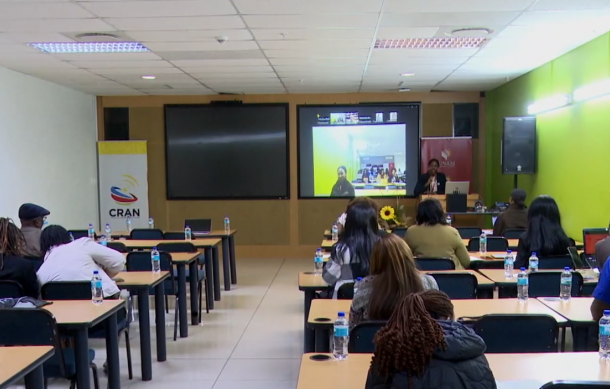
The discussions took place at the third Namibia Media and Communication Conference hosted by the University of Namibia (UNAM).
Scholars and academics from several African countries gathered to discuss indigenous communication, language and community media.
The focus was also on local content, especially on community radio.
The Communications Regulatory Authority of Namibia (CRAN) requires broadcasters to develop local content policies following the adoption of its Code of Conduct for Broadcasters.
The proposed quotas set local content at 15% of music on commercial radio, while commercial television would have 10% local content.
But speakers say quotas alone are not enough.
Olanrewaju John Ogundeyi, an Indigenous Language Media Studies researcher from Nigeria, said, "Unfortunately, when you look at the structure of media in Africa, you know it's been dominated by this global language, global languages. And we look at the inherited media frameworks as continuing to influence broadcasting in Africa. But interestingly, of course, stories have shown that African national broadcasters are beginning to have regional indigenous language radio stations around local areas."
The discussions also turned attention to gender and ownership in community broadcasting.
Speaking on community radio as a space for women's participation and empowerment in South Africa, Vuyelwae Jacobs questioned who controls the platforms where women's voices are heard.
"So as a result, I argue that my overarching research question is, how have community radio stations self-empowered women to actively engage with this platform? Has there been an alignment? And are women able to leverage such tools? So media should align with the women's participation, not men speaking on behalf of women."
Namibia is also seeking to strengthen its community media sector through its Community Media Policy and Implementation Plan, launched this year.
The discussions also highlighted the role of broadcasters in preserving indigenous languages, cultures and oral traditions through language services and local programming.
For the scholars, the future of African media is closely tied to who tells African stories, in which languages, and who controls the platforms on which those stories are told.