


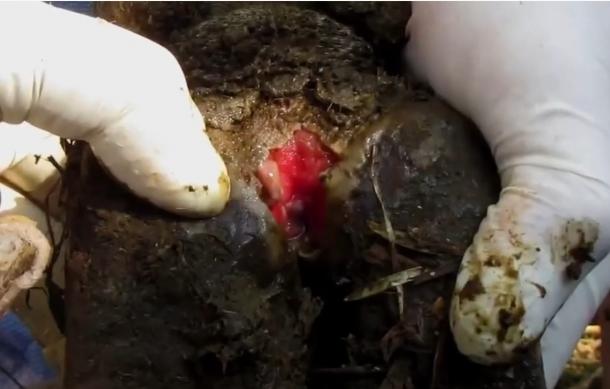
The outbreak of foot-and-mouth disease (FMD) in neighboring countries threatens Namibia's economic growth, disrupts trade, impacts animal health, and reduces income.|
This was the combined view of industry experts on the prevailing FMD outbreak in South Africa, Botswana, and Lesotho.
The Chief Veterinary Officer in the Ministry of Agriculture, Fisheries, Water and Land Reform, Kenneth Shoombe, said Namibia is one of the few countries that is FMD-free without having to vaccinate livestock.
He highlighted that the moment vaccination is implemented, Namibia will lose the export value based on the requirements of the importing countries.
This is due to the fact that sometimes there is a carrier state after vaccination or a carrier state after the animal has healed, and that remains a risk to the nation.
“Yes, the issue of vaccine production is on the table at the ministry and the directorate. We are exploring how to establish a stronger joint venture between those with the technical expertise and those with the financial capacity to undertake an investment of this magnitude in Namibia. Discussions began many years ago, and a properly conducted business proposal, sponsored by the Food and Agriculture Organization (FAO), was developed in Namibia. We are now looking to revive that plan. The business plans assessed the required quantities and examined whether it would be feasible to produce vaccines locally for Namibia. It is important to note that the areas that are not disease-free - namely the Zambezi Region and parts of Kavango East - have a cattle population of just over 200,000. That number may be too low to justify production on this scale,” Shoombe explained.
A farmers' union representatives expressed concern that a possible FMD outbreak could have a devastating effect on the livestock sector, especially in communal areas.
"From the Namibia National Farmers Union, representing communal farmers, we are concerned, and we need to address it so that we can curb it so that it cannot enter, so we will work together." Adolf Muremi said.
The agriculture ministry assured farmers that it has put measures in place to curtail any possible outbreak.
These include reinforcing border fences along high-risk areas, the establishment of spray stations across key border entry areas, and restricting the movement of animals in high-risk areas, among others.
The Minister of Agriculture, Inge Zaamwani, urged the nation to be mindful of the requirements that are tied to the trading partners, of which failing to meet them would threaten the export market.
“Our trade currently is influenced by the fact that we are without vaccination and our trading partners demand the export of our product. So if you lose that, then that obviously affects your export market," Zaamwani explained.