


About 42% of urban households in Namibia live in informal housing conditions, with the Khomas, Erongo, and Kavango East regions being the hardest hit.
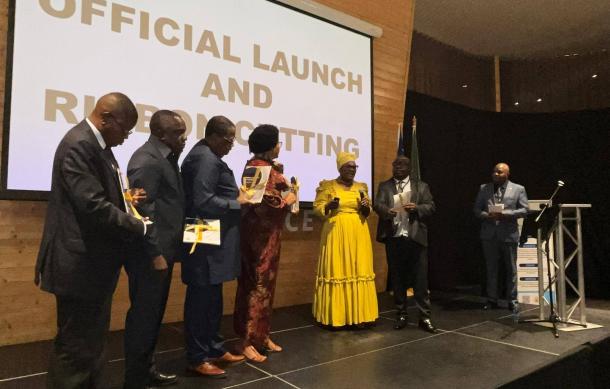
This is according to the Namibia Informal Settlements Baseline Report by the Namibia Statistics Agency (NSA) launched at Swakopmund.
NSA released its first baseline report on informal settlements, alongside the launch of a National Housing Information System commissioned by the Ministry of Urban and Rural Development.
The report comes after the government requested a clear count of informal settlements to measure progress toward its 50% formalisation target.
At the time of the request, the data did not exist.
The report identified 563 settlements nationwide.
Of those, 419 are classified as informal, while 144 are declared and gazetted but still face service backlogs.
Nationally, about 42% of urban households, representing close to 177 thousand households, live in informal housing conditions.
These include backyard shacks, improvised structures, and traditional dwellings.
NSA Statistician General Alex Shimuafeni revealed the statistics.
“Khomas has the highest population of people in urban areas, and we are not looking at rural areas. They are living in informal housing. We have more than 213,000 people living in informal housing, followed by Erongo at 70,856. My logical conclusion or explanation is that it is due to migration, as the Honorable Governor spoke about-people coming to look for jobs and so on. They have no option but to stay in informal housing. The third is Kavango East, with 70,380.”
The report also found that nearly 98% of the land where informal settlements are located is owned by local authorities, a factor officials say could make upgrading and formalization easier.
But challenges remain, with more than 60% of settlements still congested, limiting emergency access and service delivery.
Informal settlements were classified in 5 levels of upgrading, with level 1 being no or partial implementation of one service.
A total of 244 informal settlements were at level 1, while 16 settlements in the country were at level 5.
“We have 53.4% of informal settlements that were planned. I think the government's goal is to reduce informality by at least 50% for now. If 53.4% of the informal settlements were already planned, it could be a starting point-perhaps low-hanging fruit where we can begin. But it is not necessarily that straightforward,” Shimuafeni added.
Officials explained that the report is only the starting point, as it is a baseline to measure how quickly Namibia can turn informal settlements into formal communities.