


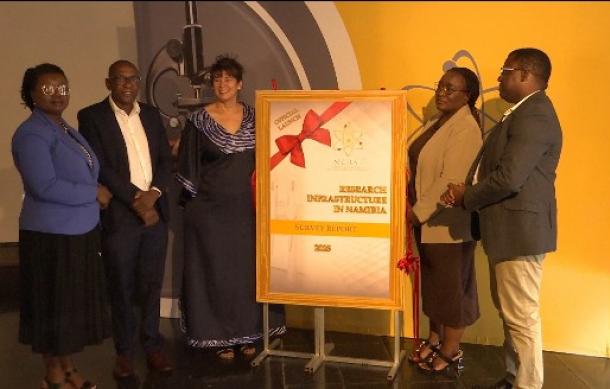
Over 50% of Namibia's research infrastructure is concentrated in the |Khomas and Erongo Regions, while no research facilities exist in Hardap, Ohangwena, and Kavango West regions.
These are part of findings contained in the just-launched Namibia's Research Infrastructure Survey Report.
Launched by the National Commission on Research, Science, and Technology (NCRST), the findings provides an overview of the country's research facilities, capabilities, and gaps.
NCRST Chief Executive Officer Anicia Peters highlights that the report marks a milestone in strengthening Namibia's education sector.
"It provides the Namibian community and, in particular, also the Ministry of Education, Innovation, Youth, Sports, Arts, and Culture with essential baseline data for developing the 10-year master plan for tertiary education and research science, technology, and innovation infrastructure, which is currently under development."
She notes that the survey mapped existing research infrastructure across the country and highlights priority research areas.
NCRST Acting General Manager for the Information Technology Department, Hilya Shikongo, presented the outcome of the research.
"As indicated, the primary purpose of the survey was to provide a comprehensive evaluation of Namibia’s national research infrastructure and to establish a strategic foundation for future research and innovation initiatives. Specifically, the survey aimed to map the existing research infrastructure across Namibia, assess institutional capacity, and evaluate current research infrastructure models in order to identify national research infrastructure needs in critical research areas."
The survey forms part of NCRST's broader mandate to coordinate, promote, and supervise research, science, technology, and innovation in the country.
Offices, ministries, agencies, development partners, and the private sector have been called upon to collaborate and strengthen Namibia's national research capacity.