


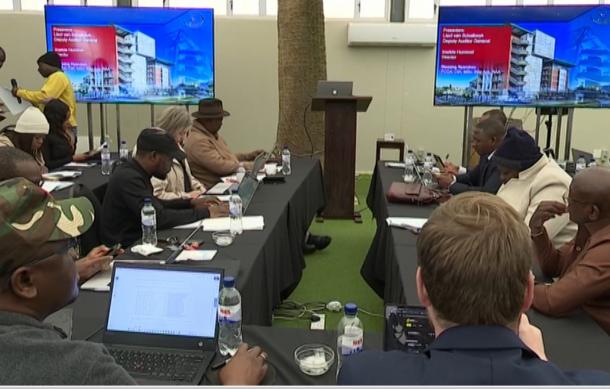
The Parliamentary Standing Committee on Public Accounts has ended the practice of providing advance questions to public institutions appearing before it, a move Subcommittee Chairperson Prof. Job Amupanda says is essential to restoring genuine oversight.
Speaking after a five-day review workshop in Swakopmund, Amupanda condemned the old practice as a deceptive tactic that allows institutions to stage-manage responses, saying it borders on corruption.
But it was one revelation that underscored this: a former CEO, Amupanda said, who left office in 2015, remained a signatory to a town council bank account.
Nearly N$13 million in expenditure was flagged, with no supporting invoices or documentation.
Prof. Amupanda stressed that officials already engage the Auditor-General before reports are finalised, making advance parliamentary questions redundant.
Public hearings, he said, must be rigorous investigations, not rehearsed performances.
"The individuals involved have been engaging with the process, so we cannot continue misleading the people of Namibia by claiming that we are conducting genuine public hearings while providing questions to those appearing before the committee in advance. That turns the hearings into little more than a staged performance between politicians and the individuals being scrutinised. Public hearings should be transparent and meaningful. Those appearing before the committee must be called to testify publicly and should be asked questions that have not been shared beforehand. If they have already been given the audit report in advance, they have had sufficient opportunity to prepare. There is therefore no justification for providing them with the specific questions ahead of the hearing, as doing so undermines the purpose and credibility of the oversight process.”
The Public Accounts Committee has raised serious concerns over the continued failure by some regional councils and public institutions to submit financial statements, warning that the lack of accountability prevents proper audits and oversight of public funds.
Chairperson of the Sub-committee on SOEs, John-Louw Mouton also weighs in.
"I believe one of the biggest concerns we have identified in dealing with these institutions is the persistent failure to submit financial statements. Some regional councils have not submitted their financial statements for several consecutive years. This means the Auditor-General is unable to audit those institutions because there are simply no financial statements to examine. Without proper financial records, it becomes impossible to determine what is happening with public finances or whether public funds are being managed responsibly. That is a serious governance and accountability concern. For that reason, we have taken a firm decision to hold these institutions accountable. Public institutions have a legal and ethical obligation to maintain proper financial records and submit them on time so that they can be audited and held accountable for the management of public resources."
A member of the Sub-committee on Municipalities and Village Councils Dr. Peya Mushelenga, had this to say.
"I believe there should be a clear timeframe within which public institutions must account to the Auditor-General when they have failed to provide sufficient information during the audit process. We also continue to see institutions that fail to submit their financial statements altogether, meaning they are not reporting as required. As a result, the Auditor-General issues qualified audit reports that highlight significant red flags and weaknesses within some local authorities and public institutions. The Public Accounts Committee is then required to summon those institutions to explain the findings contained in their audit reports. I am pleased that these audit reports have been reviewed by the relevant subcommittees, as this strengthens the oversight process and helps ensure that the issues identified receive the attention they deserve."
Chairperson of the committee Hendrik Gaobaeb expressed his concern over the financial status of traditional and local authorities.
"What we have seen over the years is that local authorities and regional councils continue to appoint consultants to prepare their financial statements. These consultants are not part of the institutions and often lack the institutional knowledge and access to the necessary supporting evidence. Despite spending hundreds of thousands of dollars on these consultants, the outcome is frequently an adverse audit opinion or a report highlighting serious financial irregularities. This raises concerns about whether public funds are being used effectively and whether the intended objective of improving financial reporting is being achieved."