


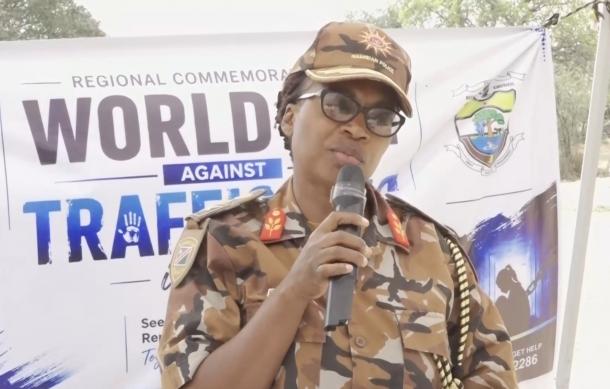
The Zambezi Region has recorded 14 cases of human trafficking involving 14 victims over the past eight years.
Speaking at the commemoration of the World Day Against Trafficking in Persons, Zambezi Police Commander Julia Sakuwa-Neo said most of the victims are children between the ages of 10 and 16.
"These ones were normally victims that were trafficked from other countries; some are being taken and used for exploitation. You should remember that behind every statistic, there is a human being, a son, a brother, sister or child, whose dignity, freedom and future deserve protection."
Victims in such cases, she said, are often promised better livelihoods and lucrative salaries, making them unaware of the dangers that lie ahead until they reach their destinations.
Some of the victims get isolated, denied communication and forced into criminal activities, including online scams and financial fraud, sexual exploitation or other forms of forced labour.
Commissioner Sakuwa-Neo cautioned people to remain vigilant and called on community members, leaders and law enforcement agencies to report suspicious activities that may be linked to human trafficking.
The Chairperson of the Zambezi Regional Council, Bernard Sisamu, who delivered the keynote address on behalf of Governor Dorothy Kabula, highlighted that this year's theme, "Trapped Behind the Scam", draws attention to the growing trend of victims being trafficked into forced criminality.
"It is also crucial for all present here today to know this: scammers may operate as such even when the person may know the victims as relatives, friends, or acquaintances."
Sisamu sheds light on how Namibia has strengthened its legal framework through the Combating of Trafficking in Persons Act, which criminalises all forms of human trafficking and provides for the protection and assistance of victims.
Namibia has also ratified international instruments, including the United Nations Protocol to Prevent, Suppress and Punish Trafficking in Persons, Especially Women and Children, as well as the Convention on the Rights of the Child and its Optional Protocol on the sale of children, child prostitution and child pornography.